

Have you ever scrolled through endless book lists, hoping to find a novel that truly pulls you in?

It is a common problem in 2026. With so many options out there, it can feel impossible to discover a story that matches your specific taste, especially if you love science fiction and fantasy. Generic recommendations just do not cut it anymore. You want something fresh. You want something that feels like it was written just for you.
That is exactly where the ready player one book comes in.
Published in 2011 by Ernest Cline, this debut novel quickly became a cultural phenomenon and a bestseller. The story is set in a dystopian 2045 where the real world is in rough shape. Most people escape reality by entering the OASIS, a massive virtual reality universe. When the creator of the OASIS dies, he leaves behind a hidden Easter egg. The first person to find it wins his entire fortune. The hunt is on. Our hero, Wade Watts, dives into a contest full of puzzles, 80s pop culture, and high stakes.
This book is a great example of why people love best sci fi books for young adults. It mixes action, friendship, and a giant digital world. If you enjoy stories that feel both futuristic and familiar, this one delivers. It also fits right in with other hits like the running man book and scythe book series. And if you love deep world building, you might also enjoy jules verne books for that sense of adventure.
In this article, we will explore what makes the Ready Player One book so special. We will look at its story, its characters, and why it still matters today. By the end, you will know if this is the next great read for you.
If you are looking for something that blends sci-fi, comedy, and heart, you might also enjoy The Ridiculous.
It is a fresh series that mixes big ideas with a lot of fun. For more great reads in the same world, check out our guide to books like the hunger games.

The Genesis of Ready Player One: From Concept to Cult Classic
The ready player one book did not appear out of nowhere. Ernest Cline had been building toward this story for years. Before he wrote novels, he was a screenwriter and a self-described full-time geek. His love for 1980s pop culture, classic video games, and science fiction ran deep. That passion became the fuel for his debut novel.
Cline started working on the story long before it found a publisher. He wanted to write a love letter to the things he grew up with. Think arcade games, old movies, and obscure trivia. He also wanted to explore what the future might look like if we spent more time in virtual worlds than in the real one. That mix of nostalgia and forward thinking created something fresh.
Here is a surprising fact. The film rights for the book were purchased by Warner Bros. on the same day Cline finalized his publishing deal with Random House. That happened one full year before the novel even hit shelves. You can dig into more details about what went down behind the scenes at the Ready Player One Wiki.

That is how confident Hollywood was in this story.
When the book finally came out in 2011, it did not just do well. It exploded. Readers loved the fast pace, the puzzle solving, and the underdog hero. The novel quickly made its way onto bestseller lists and became a must read for fans of modern fiction for genre readers. Its blend of dystopian reality and thrilling virtual adventure hit a nerve.
The initial reception in the sci-fi community was electric. People formed online groups to discuss the clues and Easter eggs hidden in the story. Some readers even started their own quests inspired by the book. That community building helped turn the novel into a cult classic almost overnight. It is rare for a debut to create that kind of buzz, but this one did it.
Key milestones came fast. The book became a New York Times bestseller. It won awards. Fans demanded a sequel. And then came the movie adaptation directed by Steven Spielberg. That brought even more readers to the page. If you want to see how the book ranks among other popular titles, check out the Goodreads page for detailed reviews and ratings.
The real magic happened because Cline understood his audience. He wrote for people who grew up on the same stories he loved. He connected with readers who felt like outsiders.

And he gave them a world where being a geek was a superpower.
Today, the ready player one book stands as a marker of its time. It helped shape what people expect from virtual reality stories. It also paved the way for other hits like the running man book and scythe book series. If you are looking for a story that started as a personal project and became a global phenomenon, this is it. The journey from concept to cult classic took years, but the result was worth the wait.
A Deep Dive into the Plot: Wade Watts and the Hunt for Halliday’s Easter Egg
Now that you know how the ready player one book was born, let’s step inside its world. The story takes place in 2045, and the real world is a mess. People live in stacks of trailers, struggle for food, and face constant problems. The only escape is the OASIS, a massive virtual reality universe where you can be anyone, go anywhere, and do almost anything. Wikipedia describes it as a worldwide VR game that almost everyone uses for work, school, and fun.
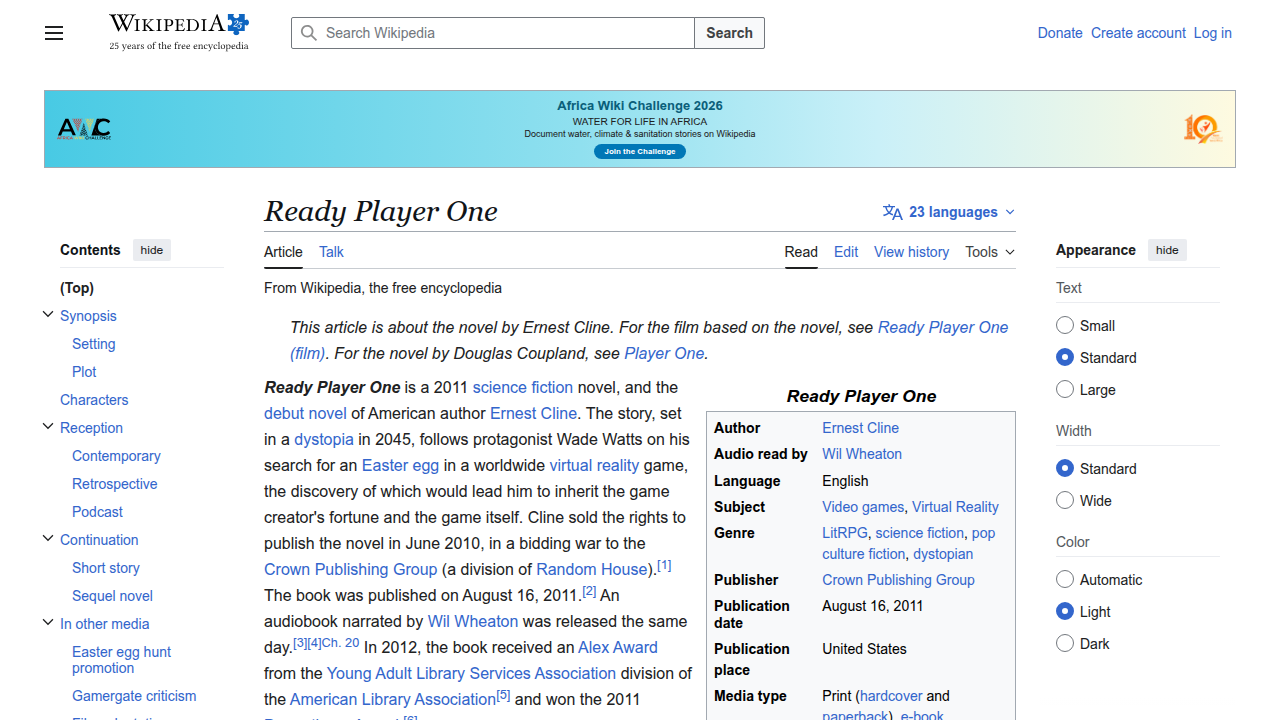
The whole plot kicks off when James Halliday, the creator of the OASIS, dies. He leaves behind a video message. Inside that message, he reveals a contest. Whoever finds a hidden Easter egg inside the OASIS will inherit his entire fortune, worth hundreds of billions of dollars. That fortune also comes with total control of the OASIS itself. SparkNotes gives a full breakdown of how Wade Watts, a teenager from Oklahoma, decides to join the hunt.
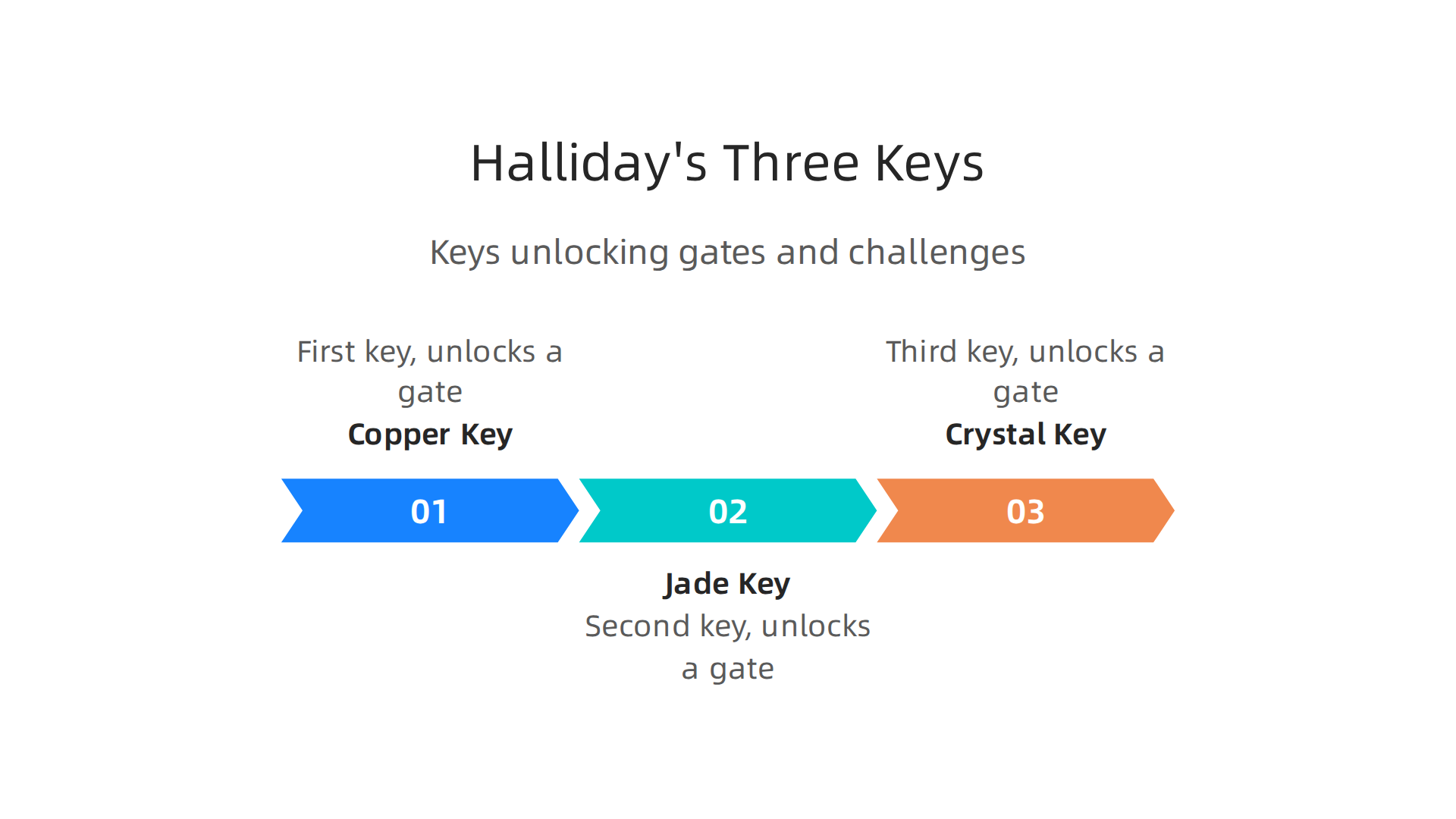
The contest is built around three keys. Each key unlocks a gate, and each gate leads to a challenge. The first key is the Copper Key. The second is the Jade Key. The third is the Crystal Key.
But finding them is not simple. Halliday was obsessed with 1980s pop culture: old arcade games, movies, music, and TV shows. To solve each clue, you have to know that stuff inside and out. Halliday’s Easter Egg Hunt on the Fandom wiki explains that the entire plot of the book and movie centers on this contest.
The first challenge involves a race in a virtual world called the Tomb of Horrors. Wade, using his avatar Parzival, figures out that the key is not about driving fast or winning. It is about going backward. That is the kind of clever twist Halliday loved. Other challenges force players to act out scenes from movies like WarGames or play through an entire Atari 2600 game called Adventure without dying. These puzzles make the reader feel like they are right there solving them.
Major plot twists keep the story moving fast. One big twist is that Halliday had a secret crush on his best friend’s wife, Kira. That secret shaped the entire contest. Another twist involves the love story between Parzival and Art3mis, another hunter. They team up, but later a betrayal tests their trust. And the biggest twist of all comes at the end. The final clue is not about being the best gamer. It is about understanding that Halliday created the OASIS because he wanted to share his love of games. The last gate rewards the player who plays for fun, not for money. SparkNotes covers these twists in more detail.
The narrative impact of these twists is huge. They turn a simple treasure hunt into a story about friendship, loss, and what it means to live a good life. Readers feel invested because every clue feels like a real puzzle. It is no surprise that this remains one of the best sci fi books for young adults and a favorite for readers who love high stakes adventures. If you enjoyed this kind of clever, fast paced storytelling, you will also enjoy the running man book and the scythe book series for their similar blend of action and thought provoking ideas.
For readers who want more stories that mix identity, reality, and a bit of humor, check out this series where all those elements collide. Start the series where identity, reality, and comedy collide here. It is a perfect next step after finishing the ready player one book.
If you are looking for similar YA dystopian adventures that keep you turning pages, The Hunger Games book readers will love these YA speculative fiction picks for more recommendations.
Themes of Identity, Escapism, and Reality in a Digital Age
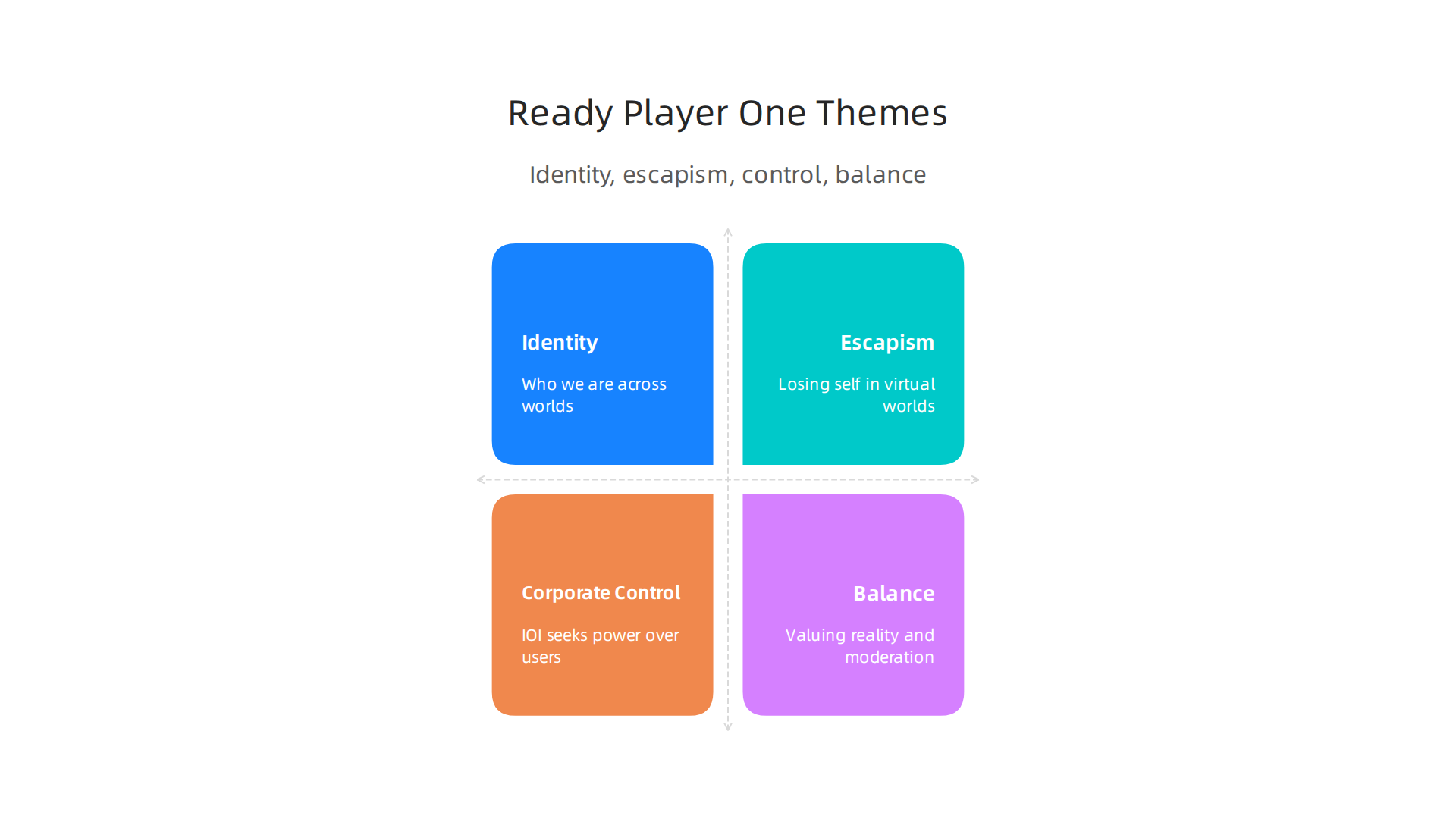
Now that you have followed Wade through the hunt, let us look at what the story really means. The ready player one book is not just a fun adventure. It asks big questions about who we are, why we escape, and what happens when we lose touch with the real world.

Identity in Two Worlds
One of the most powerful ideas in the book is that your identity can change depending on where you are. In the real world, Wade is a poor, lonely teenager. But inside the OASIS, he is Parzival. He is confident, clever, and respected. SparkNotes points out that identity is not fixed in this story. Characters hide behind avatars. A shy person can become a hero. A lonely person can find friends. This makes you wonder: Are you more yourself in the real world or in the digital one? Better Tuition Academy explores how the book shows the power of living in a virtual world and what that means for our sense of self.
The Pull of Escapism
The book does not shy away from the dark side of escapism. Almost everyone in 2045 uses the OASIS to forget their problems. An academic paper on escapism discusses how easy it is to get lost in a virtual utopia. Wade himself struggles with this. He spends hours in the OASIS because his real life is painful. But the story warns us. You cannot hide forever. Eventually, you must face the real world. This tension runs through every chapter and makes the ready player one book feel honest about why we love technology. For more stories about characters who must confront hard truths, check out The Hunger Games book readers will love these YA speculative fiction picks.
Corporate Control and Consumerism
The OASIS is not just a game. It is also a product. A huge company called IOI tries to take it over. They want to control what people see, do, and buy. An analysis of the novel’s space construction highlights the conflict between the real world and the virtual one. Halliday created the OASIS for fun and knowledge, but corporations see it as a cash machine. The book warns us about letting companies own the places where we spend our time. It also celebrates the value of knowing things. Wade wins not because he has money, but because he studied Halliday’s obsessions. From old arcade games to jules verne books, his deep knowledge is his secret weapon. Knowledge beats greed. If you enjoy stories where curiosity wins, you will also like books like Michael Crichton books for fans of smart techno thrillers.
The Balance We All Need
In the end, the ready player one book does not say the OASIS is evil. It says balance matters. Wade keeps his friendships in the real world. He learns that reality, even with all its pain, is worth living in. That is a message that sticks with you long after you close the book. This is why it remains one of the best sci fi books for young adults and for anyone who loves a story with both action and meaning.
If you want a fast, funny read that plays with similar ideas about identity and digital life, try this book. Add a Funny Sci-Fi Read for a quick adventure full of wit and heart.
The Cultural Phenomenon: Pop Culture References and Their Impact
Open the ready player one book and you step into a time machine packed with everything from the 1980s. Arcade games, classic movies, old music, and dusty cartoons. Ernest Cline filled every chapter with nods to the pop culture he grew up loving. The result? A novel that feels like a treasure hunt for anyone who remembers the good old days of geekdom.
A Nonstop Firehose of References
The sheer number of references in the ready player one book is staggering. According to one guide, the movie adaptation alone contains over 120 Easter eggs and cameos. The book goes even deeper. You will find mentions of Space Invaders, Ghostbusters, The Muppet Show, and dozens of other touchstones from the 80s. Shmoop’s study guide catalogs many of these allusions, showing just how much Cline wove into the story.
This avalanche of references is not random. Each one serves a purpose. They build the world of the OASIS, a virtual playground where the past is eternal. They also reward readers who know their trivia. If you catch a reference, you feel like you are in on the secret. If you miss one, you still enjoy the story. That is smart writing.
Shared Nostalgia That Connects Readers
Why do these references matter so much? Because they create a shared experience. Readers who grew up in the 1980s feel a wave of nostalgia when they read about The Adventures of Buckaroo Banzai or listen to the music of Oingo Boingo. Readers born later get a crash course in what made the decade special. Suddenly, a 15 year old and a 45 year old can bond over the same book.
This shared nostalgia is a big reason the ready player one book became a cultural phenomenon. It turned reading into a communal activity. People made lists of every reference. They debated which ones were the best. They started book clubs just to talk about the Easter eggs. If you enjoy that kind of discussion, check out our guide to fantasy and sci fi book club books that spark real conversation. It is full of titles that will get your group talking.
How the Book Changed the Meaning of "Easter Egg"
Before this novel, the term "Easter egg" belonged mostly to video games and software. It meant a hidden message or feature tucked away for observant users. Cline took that idea and made it the core of his plot. Halliday’s contest is one giant Easter egg hunt.
In doing so, the book introduced millions of readers to the concept. Now "Easter egg" is a common term in literature, movies, and TV shows. Writers intentionally hide nods to other works, knowing fans will love finding them. The ready player one book did not invent the practice, but it definitely popularized it. Today, you can hardly watch a big superhero movie without catching a hidden reference.
That is the lasting impact of this story. It is not just a fun adventure. It is a love letter to pop culture that changed how we think about hidden treasures in stories.
Comparing the Book vs. the 2018 Film Adaptation
If you have read the ready player one book, you probably asked yourself one big question: Is the movie as good? Steven Spielberg took on the challenge in 2018, and fans have been arguing about it ever since. The truth is, the book and the film are two very different experiences. Let us break down the biggest changes and what they mean.
Major Differences in Plot and Characters
The movie keeps the core idea of a virtual treasure hunt. But the details change a lot. For example, the first challenge in the book requires players to win a game of Joust at the Tomb of Horrors. The movie swaps that out for a high-speed race through New York City. That race never happens in the novel at all.
Character changes are also huge. In the book, Daito and Shoto are online friends who never meet in real life. The film makes them brothers, and one of them is just 11 years old. According to Paste Magazine’s list of 22 differences, this shift changes the dynamic of the whole group. The romantic subplot between Wade and Art3mis also gets turned into the main driving force of the film, as noted by a book vs film comparison blog. In the novel, their relationship is slower and more realistic.
The ending is completely different too. In the book, the final battle involves a giant mech and a massive army of OASIS users. The movie takes a simpler route with a focus on the heroes and a more straightforward showdown. Some major deaths from the novel are left out entirely.
How the Changes Affected the Tone
The ready player one book feels like a deep dive into 80s nostalgia. It is slow, detailed, and full of inside jokes. The movie, on the other hand, speeds everything up. Spielberg wanted to make a fun blockbuster that works for everyone, not just hardcore fans.
One result is that the movie loses some of the book’s themes. The novel warns about the dangers of escaping reality and the value of human connection. The film keeps those ideas but makes them lighter. For example, the romance becomes a bigger focus, which critics say waters down the message about friendship and teamwork.
Another change is the tone of the challenges. In the book, each gate requires real knowledge of Halliday’s life and obsessions. The film turns the gates into action set pieces. That makes the movie more exciting to watch but less thoughtful. As one Teen Ink reviewer put it, "The book is better, and way more detailed, and more developed, but the movie is still extremely entertaining."
Fan Reception and Cultural Impact
Most fans agree that the book is deeper. But the movie reached a much wider audience. The film grossed over $580 million worldwide and introduced millions of people to the story. It also sparked a new wave of interest in 80s pop culture. For younger viewers, it became a gateway to discovering old movies and games.
Both versions helped make the term "Easter egg" a household word. Whether you prefer the novel’s deep dive or the film’s flashy adventure, there is no denying the cultural impact. If you enjoyed this story and want more sci fi recommendations, check out our guide to The Hunger Games book readers will love these YA speculative fiction picks. It is full of similar dystopian worlds with their own hidden treasures.
At the end of the day, the ready player one book and its movie are two different ways to enjoy the same idea. One is a treasure map. The other is a roller coaster. Both are worth your time.
Why Ready Player One Resonates with Fantasy and Sci-Fi Readers
If you have ever picked up the ready player one book, you probably did not put it down until you finished it. There is something about this story that grabs hold of fantasy and sci-fi readers in a special way. Let us talk about why that is.

The Pull of Nostalgia
The ready player one book is a love letter to the 1980s and 1990s. Ernest Cline packed it with references to old movies, classic video games, and forgotten pop culture. For readers who grew up in that era, it feels like coming home. You remember playing Pac-Man at the arcade. You remember watching The Breakfast Club on a VHS tape. The book taps into those memories and makes them part of the adventure.
But here is the thing. You do not need to be a child of the 80s to enjoy it. The book introduces these references in a way that feels exciting even if you have never heard of them. That is why it works for both older readers and younger ones who want to discover what they missed. The Wikipedia page notes that the story follows a high school student in 2045, but the heart of the novel lives in the past.
Virtual Worlds as Both Escape and Mirror
Fantasy and sci-fi readers love worldbuilding. We want to get lost in places that feel real and alive. The ready player one book gives us the OASIS, a virtual reality universe where you can be anyone and do anything. That is pure fantasy fuel.
But the book does something smart. It shows us that the OASIS is also a mirror. Wade Watts escapes from his grim real life into this digital playground, and the story asks hard questions about what we lose when we spend too much time there. The SparkNotes guide on themes explores this tension between fantasy and reality. For readers who love epic fantasy adventures, this balance makes the book feel grounded and thoughtful.
A Community of Hunters
Here is one of the best parts. The ready player one book creates a community around itself. Fans love to decode every Easter egg hidden in the text. Some of them are right there on the page. Others require real digging. The ScreenRant guide to Easter eggs in the film version shows how deep these references can go.
Readers form bonds by arguing about the best challenges. They share theories about Halliday’s clues. They recommend the book to friends who love the same kinds of stories. It is the same feeling you get from the best sci fi books for young adults or classic jules verne books. There is a shared language and a sense of belonging.
If you enjoy the thrill of discovery and want to find other books that spark the same kind of discussion, check out our collection of modern fiction for genre readers. It is full of hidden gems that will keep you turning pages.
The Crossover Appeal
The ready player one book sits at a sweet spot between genres. It has the futuristic setting of sci-fi. It has the quest structure of fantasy. It has the humor and heart of a great YA novel. That is why it appeals to such a wide audience. You can love The Running Man and still find something here. You can be a fan of the scythe book series and feel right at home.
At its core, this is a story about friendship, obsession, and the joy of playing together. Isn’t that what draws us to fantasy and sci-fi in the first place?
If you want to dive into another world that blends humor, science fiction, and big ideas, check out The Ridiculous. It is a series that starts with one simple question: What happens when nobody remembers who you are? Start the series where identity, reality, and comedy collide.
Summary
Ready Player One by Ernest Cline is a fast-paced dystopian novel set in 2045 where most people escape a grim reality through the vast virtual world called the OASIS. The article traces the book’s rise from Cline’s passion project to a cultural phenomenon, outlines the core plot—Wade Watts’ hunt for James Halliday’s hidden Easter egg—and explains the three-key challenge structure that drives the story. It examines major themes like identity, escapism, and corporate control, shows how 1980s pop-culture references fuel both plot and nostalgia, and compares the novel’s deeper focus with Spielberg’s faster, more visual 2018 film adaptation. Readers will learn what makes the book resonate with sci-fi and YA audiences, how its puzzles and community-building changed fandom, and which similar titles to try next. The article helps you decide if Ready Player One fits your reading tastes and gives resources for deeper discussion or further reading.