

Introduction
You have probably heard of the giver book by Lois Lowry. It is one of those rare novels that has stayed in school classrooms for decades. And there is a good reason for that. The story pulls you into a world that looks perfect on the surface but hides something darker underneath.
The novel is set in a carefully controlled community at an unspecified point in the future. Everything runs by strict rules. No one makes real choices. Everyone follows the same path. As SparkNotes explains, the isolated setting is key to understanding how this world works. The community has given up pain, but they have also given up joy, color, and real human connection.
The main character, Jonas, gets chosen for a special job. He becomes the Receiver of Memory. That role forces him to see what the community has hidden. He learns about love, war, happiness, and sorrow. And once he knows the truth, he cannot pretend anymore.
This is where the themes of memory, choice, and individuality hit hardest. The community runs on what one source calls a totalitarian system where no choices can be made independently. Jonas starts to question everything. His journey is what makes readers of all ages keep turning the pages.

The Giver also paved the way for modern YA dystopian fiction. Think about books like The Maze Runner book series or even many best fantasy books for teens that explore similar ideas. Lowry showed how a simple story about one boy could ask big questions about what makes life worth living. If you enjoyed The Hunger Games book, you will find a lot to love in Lowry’s classic too. In fact, you might want to check out our recommendations for YA speculative fiction fans to discover more thought-provoking reads like this one.
In this article, we will explore why The Giver still matters in 2026. We will look at its place in dystopian literature, how it has influenced other authors, and why its message feels more urgent than ever. Whether you are reading it for the first time or revisiting it after years, this book has something new to offer.
Looking for a Fresh Series? The Ridiculous blends sci-fi comedy, heart, and big weird ideas. It might be your next unexpected favorite.
The World of The Giver: A Quiet Dystopia
Here is the unsettling truth about the community in the giver book: it looks perfect on the outside, but it runs on control. There is no crime, no hunger, no war. Everyone has a job, a family unit, and a place to belong. But as the SparkNotes setting guide points out, the community is isolated and locked in a future that feels frozen. The peace comes at a terrible cost.
The community uses something called Sameness. That means no weather, no seasons, no color. Every house looks the same. Every family follows the same rules. Even language is stripped down. When someone is "released," it sounds calm and clean, but it really means death. The community has given up everything messy about being human. As one analysis explains, this is a totalitarian society where no choices can be made independently. The people do not even know what they are missing.
The community is also built on precise, careful language. Feelings are discussed in morning rituals called "telling of feelings." Pillows are taken for "stirrings." Everything is labeled. This keeps conflict away, but it also kills individuality. The Study.com video explains that the community sacrifices joy to avoid pain. They do not have love, but they also do not have grief. They do not have art, but they also do not have fear.
Jonas starts the story fully inside this system. He follows the rules. He takes his pill. He does not question anything. But when he becomes the Receiver of Memory, he begins to see cracks in the perfect world. The first time he experiences color, sunshine, or sledding down a hill, he realizes how much the community has stolen from everyone. His journey from blind acceptance to painful awareness is the heart of the novel.

If you want to explore other stories that make you question the world around you, take a look at our list of fantasy and sci-fi book club books that spark real discussion. These titles share that same power to make readers think.
The Community’s Structure: Rules, Roles, and Rituals
In the giver book, life follows a strict plan. There are no surprises. Every person has a place, and every action has a rule.
The most important ritual is the Ceremony of Twelve. At this event, children are assigned their life’s work based on careful observation by the Elders.
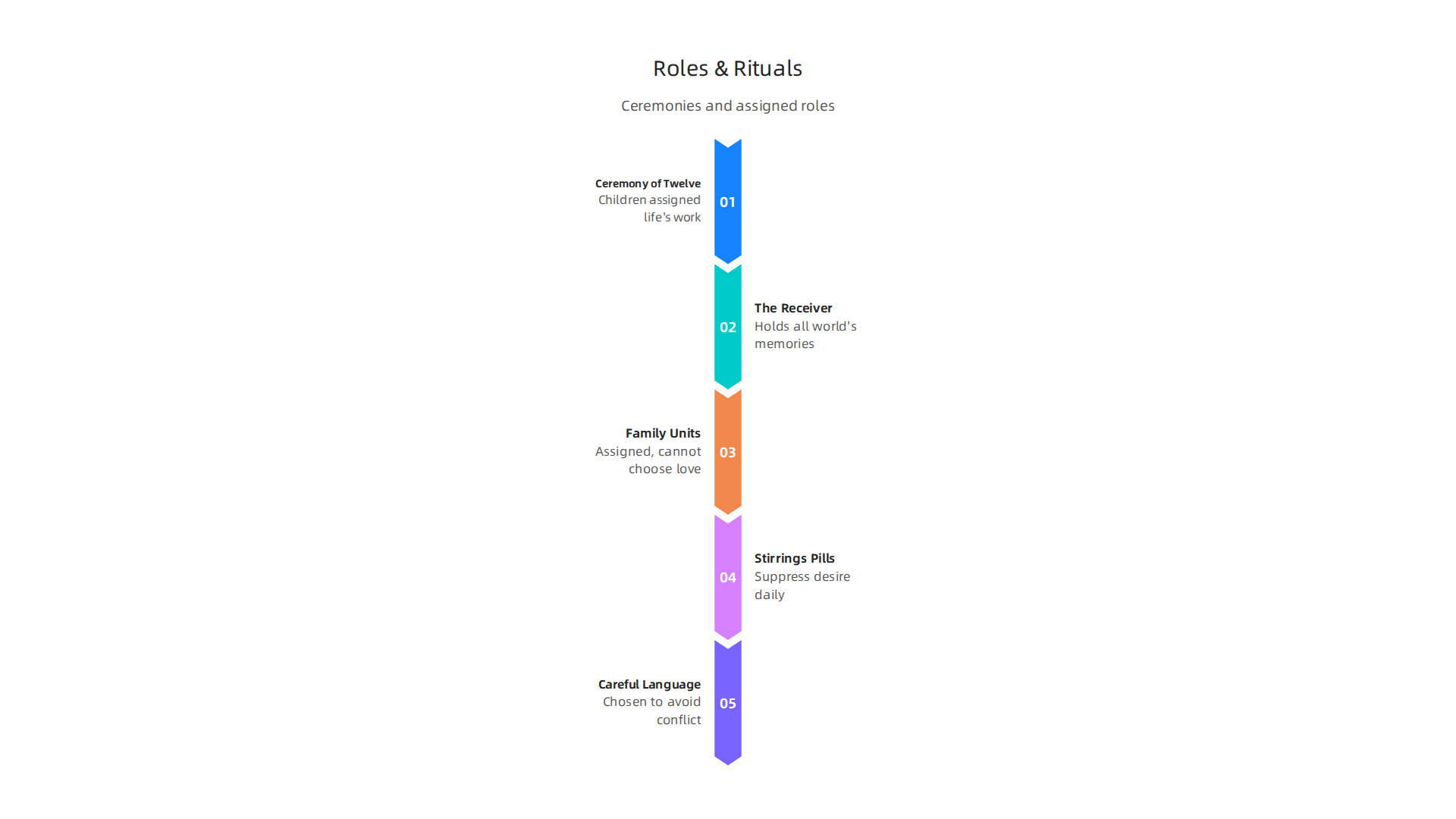
As the SparkNotes setting guide explains, this ceremony decides each person’s future role in the community. Some become Nurturers, others Birthmothers, and a few become the Receiver of Memory.
The Receiver, who later becomes The Giver, holds all the memories of the world. This role protects the rest of the community from the pain of the past. As one analysis video notes, this job frees everyone else from carrying those burdens.
Family units are also assigned. Couples apply for a spouse and then for children. They cannot choose love or passion. Stirrings are treated with daily pills. Language is carefully chosen to avoid conflict. The community sacrifices depth for safety, as the Study.com video points out.
These structures keep the world orderly, but they also trap everyone in a life without color or choice. It is a system built on control, not freedom.
If you like stories with tightly controlled societies, you might enjoy other books that explore similar ideas. Take a look at our list of YA speculative fiction picks for fans of The Hunger Games to find your next read.
Why The Giver Remains a Staple in YA Literature
You might wonder why a book about a colorless, controlled world still gets read decades later. The answer is simple: the giver book is built to last.
First, it won the highest honor in children’s fiction. In 1994, Lois Lowry won the John Newbery Medal for this novel. That award marks the best of the best in children’s literature. As of 2026, the book has sold more than 12 million copies worldwide according to Wikipedia. That kind of staying power does not happen by accident.
Second, schools keep using it. Middle and high school teachers love how the story opens up big conversations.

They use it alongside other titles like the maze runner book or the hunger games to show different sides of dystopian worlds. Students who usually do not enjoy assigned reading often get pulled in by Jonas’s journey. The short chapters and clean writing also make it one of the better short stories for high school units to teach despite being a full novel.
Third, the themes work for all ages. A twelve-year-old sees a story about growing up and asking questions. An adult sees a warning about safety vs. freedom. That is rare. Many best fantasy books for teens lose their magic when you get older. Not this one.
If you want more stories with this kind of depth and discussion potential, check out our list of fantasy series recommendations for your next epic adventure after Percy Jackson.
And if all this heavy thinking makes you want a funny escape, try this absurd sci-fi comedy for a change of pace.
Reception Over Time: From Banned Books to Beloved Classic
Here is the thing. A book that makes you think often makes some people uncomfortable. The giver book has been challenged and banned in many schools because of its heavy topics like pain, memory, and control. But that pushback did not kill it. It actually made the book more important.
Critics and teachers still praise how the story handles deep moral questions. It never talks down to young readers. Instead, it trusts them to wrestle with ideas about freedom and truth. According to Wikipedia, the book has sold over 12 million copies worldwide as of 2026. That staying power shows that people want stories that challenge them.
The 2014 film adaptation starring Jeff Bridges and Taylor Swift brought a whole new wave of readers. Kids who saw the movie picked up the novel. Adults who had not read it since middle school went back to rediscover it. The movie was not perfect, but it reminded everyone why the story still matters.
If you enjoy books that lead to deep group conversations, check out these fantasy and sci-fi book club books that spark real discussion. They have the same kind of layered meaning as the giver book.
The Giver in the Context of Classic Dystopian Literature
So where does the giver book fit among the big names in dystopian fiction? If you have read 1984 or Brave New World, you already know the neighborhood. But Lowry’s novel lives in a different house on that street.
The Shared DNA of Control
All three books imagine worlds where freedom is gone. In Brave New World, everyone is happy because they are drugged and conditioned from birth.
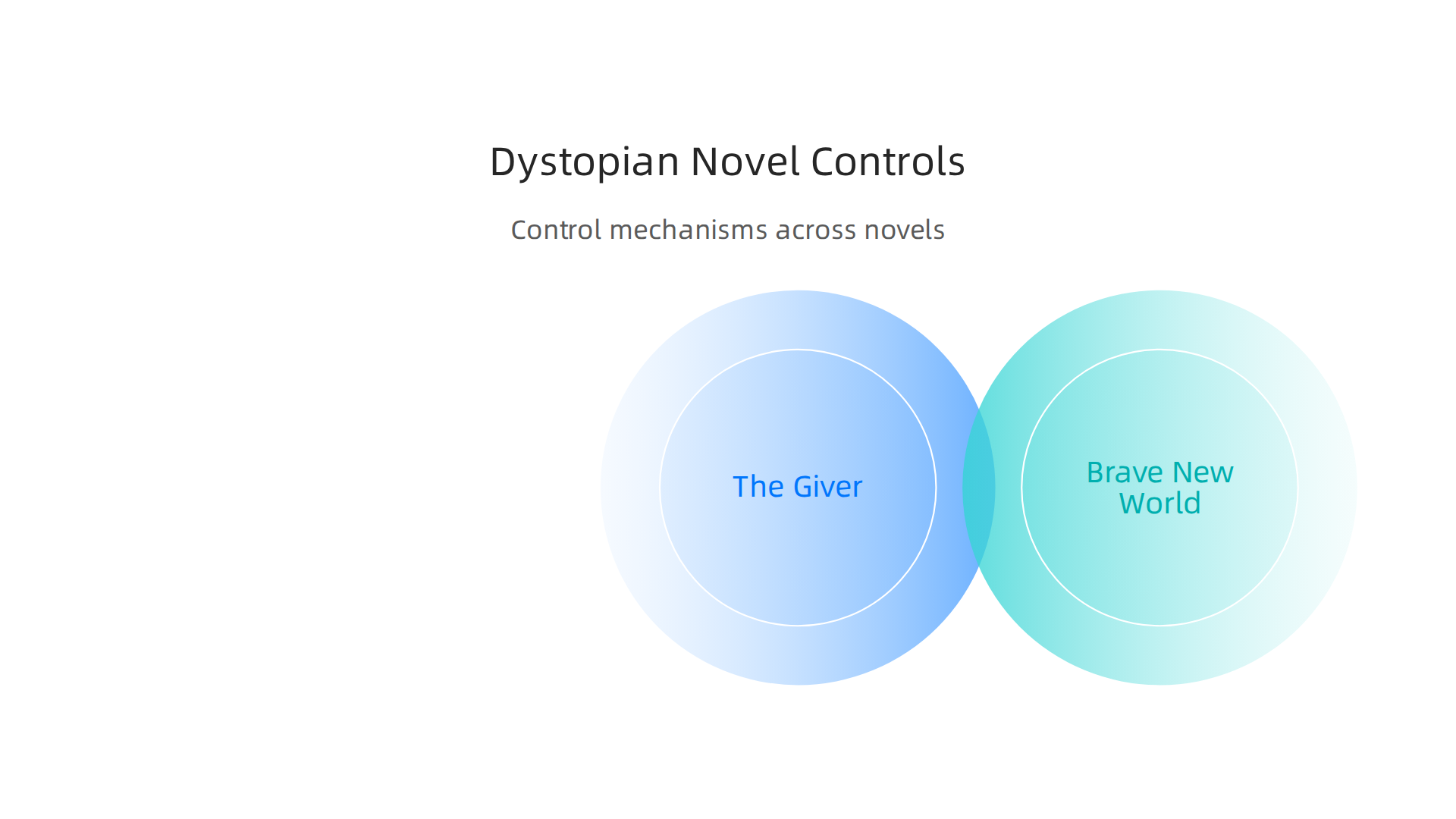
In 1984, everyone is scared because Big Brother is always watching. The giver book sits somewhere in the middle. The community has no pain, but also no color, no music, no real love. According to SparkNotes, the novel was clearly influenced by the dystopian giants that came before it.
A comparison between The Giver and Brave New World shows that both societies use technology to keep people in line. But here is the difference. In Brave New World, people want to be controlled. They love their pills. In the giver book, the characters do not know what they are missing. That quiet ignorance is what makes it so unsettling.
What Makes It Different
The tone is where Lowry breaks away. Orwell and Huxley wrote for adults. Their books are dense, angry, and full of political warnings. The giver book was written for young readers. So the language is simpler. The world is smaller. But the questions are just as big.
Here is the thing. A 12 year old can read the giver book and feel the same chill an adult feels reading 1984. That is rare. A comparative study of 1984 and Brave New World points out how both older novels rely on heavy political systems to scare the reader. Lowry scares you with silence. No screaming. No torture. Just a world where nobody knows how to cry.
If you want to see how modern authors carry this torch, check out these Hunger Games style YA speculative fiction picks. They keep the dystopian spirit alive for today’s readers.
The Big Takeaway
Lowry proved that you do not need a dark adult novel to explore dark adult ideas. The giver book belongs in the same conversation as the classics. It just speaks in a quieter voice.
Ready to keep exploring strange worlds that mess with your sense of reality? Start the series where identity, reality, and comedy collide. It is the perfect next stop after you finish Lowry’s masterpiece.
Common Themes and Divergences: Memory, Surveillance, and Freedom
All three novels ask the same scary question. Is happiness worth giving up your freedom? In Brave New World, people trade pain for pleasure and call it peace. In 1984, they trade truth for safety and call it loyalty. The giver book asks what happens when you trade color for comfort. The community is calm. Nobody starves. Nobody fights. But nobody feels anything real either.
Here is the big difference. Memory is the heart of the giver book. Jonas does not just learn about the past. He carries it. Pain, joy, snow, sunlight. All of it lives inside him. According to SparkNotes, the novel borrows the idea of a controlled society from earlier dystopian works, but it adds something new. Memory becomes the only weapon against the lie.
Surveillance works differently too. In 1984, telescreens watch every move. In Brave New World, conditioning makes surveillance almost unnecessary. People police themselves. In the giver book, the control is quieter. There are no cameras. No secret police. Just rules that nobody questions. An analysis of 1984 vs. Brave New World points out how each story uses different tools to shape citizens. Lowry uses silence and sameness.
That makes the giver book unique. It warns you without shouting. If you enjoy stories that make you think about the cost of a perfect world, you might also like these fantasy and sci-fi book club books that spark real discussion. They dig into the same deep questions about memory, control, and what it means to be free.
Modern YA Dystopian Novels Inspired by The Giver
Since The Giver arrived on bookshelves in 1993, its quiet warning has echoed through countless stories. It didn’t just change how we think about utopias. It changed the blueprint for the giver book generation that followed.
It is hard to imagine The Hunger Games, Divergent, or Matched without The Giver paving the way. These modern blockbusters took Lowry’s core question – what is the cost of a perfect society? – and turned up the volume. According to a 2026 comparative study, both The Giver and The Hunger Games present futures altered by war where control is the main tool for peace. But where The Giver uses silence and sameness, The Hunger Games uses spectacle and survival. A detailed analysis on Edubirdie notes that survival in The Giver means preventing pain, while in The Hunger Games, it means fighting for your life against the state.
This is where the big shift happens. Kids in these newer books get angry. They fight back. Katniss rebels openly. Tris chooses her faction.
But Jonas? He just feels. And that act of feeling is the first rebellion. As 123 Help Me points out, a common theme is that people need their rights and freedoms. Jonas just learns this quietly. Katniss learns it with a bow in her hand. The character arcs in the giver book focus on awakening. In later YA dystopias, the arc is about action. But both start with the same spark: realizing the world is broken. An analysis on IPL.org explains that The Giver focuses deeply on the importance of memory, while The Hunger Games focuses on survival. Yet both are responses to the same broken system.
World-building in The Giver is about what is missing. No color. No music. No deep feelings. The world-building in The Hunger Games or Divergent adds layers. Factions. Districts. Games. But the core warning remains the same. A society that tries to eliminate struggle also eliminates choice. Lois Lowry herself noted in an interview that her book is less violent than The Hunger Games or Divergent. But the psychological weight is just as heavy.
If you love stories that question what we trade for safety, you owe it to yourself to start at the source. Then keep going. The world of speculative fiction is full of these big, strange ideas. Series like the maze runner book or vampire academy books carry the torch lit by the giver book.
Looking for a Fresh Series? The Ridiculous blends sci-fi comedy, heart, and big weird ideas. It asks its own questions about identity and reality.
Start Your Next Strange Adventure and see where the chaos takes you.
For more great picks, check out our list of YA speculative fiction books that fans of The Hunger Games will love.
How The Giver Paved the Way for Rebellious Heroines and Collectives
Jonas was never the fist-pumping warrior type. He was the reluctant hero. The quiet kid who starts asking the wrong questions. That character archetype the quiet observer who awakens to injustice became the foundation for so many later protagonists. Katniss pulls a bow. Tris jumps off a building. But their journey starts the same way Jonas’s did: with unease.
Lowry also handed later writers a powerful tool: collective memory. The idea that a society can lose its past and repeat its mistakes appears in almost every dystopia since. The analysis on IPL.org explains how The Giver focuses on memory while later books focus on survival, but both use forgotten history as fuel for rebellion. The characters in the maze runner book or vampire academy books often fight to recover what was erased.
And then there is that open ending. Jonas and Gabriel sledding into uncertainty. It left readers hungry for more. That single choice inspired Lowry to write three companion books, creating the Giver Quartet. It also taught authors that unsatisfying endings can be satisfying. You do not always need a clean bow on top.
This tradition of gentle rebellion and shared memory keeps the giver book alive in every new release younger readers pick up. If you love stories about young people who dare to feel when the world says not to, check out our list of YA speculative fiction books that fans of The Hunger Games will love.
Thematic Analysis: Freedom, Choice, and Identity
Here is where the giver book punches you right in the gut. The community Jonas lives in is perfectly safe. No hunger. No pain. No scary decisions. Sounds nice, right? But that safety comes at a steep cost. You give up your freedom. You give up your identity. And you give up the chance to feel deeply. The book forces us to confront an uncomfortable question: is a perfect world worth the loss of our humanity?
The central conflict of the novel is a tug of war between safety and freedom. On one side, you have a society that removed every risk. On the other, you have the messy, beautiful reality of human choice. As GradeSaver points out, the community eliminates personal variation in favor of Sameness and predictability. But Sameness also erases joy, love, and art. The community traded color for comfort. They traded passion for peace.
Jonas starts to understand this trade when he receives memories from the Giver. He learns what snow feels like. What family really means. What it is like to make a real decision. According to an analysis on LitCharts, Jonas realizes that choice is essential to human happiness and that choice is power. That realization changes everything.
And here is the thing that still gives me chills. Jonas’s choice to escape is not just about running away. It is an act of reclaiming his own identity.

For the first time in his life, he makes a decision that is truly his own. He chooses pain over numbness. He chooses uncertainty over safety. He chooses to be a real person instead of a predictable cog. That kind of bravery is what makes great dystopian heroes unforgettable.
The novel also asks us whether any system can be perfect without crushing what makes us human. Adults take pills to suppress desire, as the Word on Fire article notes. That is not a solution. That is a surrender. The book suggests that a perfect world built on control is not really perfect. It is hollow.
If you love stories that wrestle with these big questions, you need books that fire up real discussion. Our list of fantasy and sci-fi book club books that spark real discussion will give you plenty of titles to tear apart with your friends. Each one tackles freedom, identity, and the price of a perfect world.
How to Read The Giver with a Critical Eye: A Guide for Book Clubs and Solo Readers
By now you have felt the weight of Jonas’s world. His community is clean, predictable, and safe. But you probably sensed something off from the first page. That feeling is exactly where good reading starts. When you approach the giver book with a critical eye, you unlock layers that change how you see the story forever.
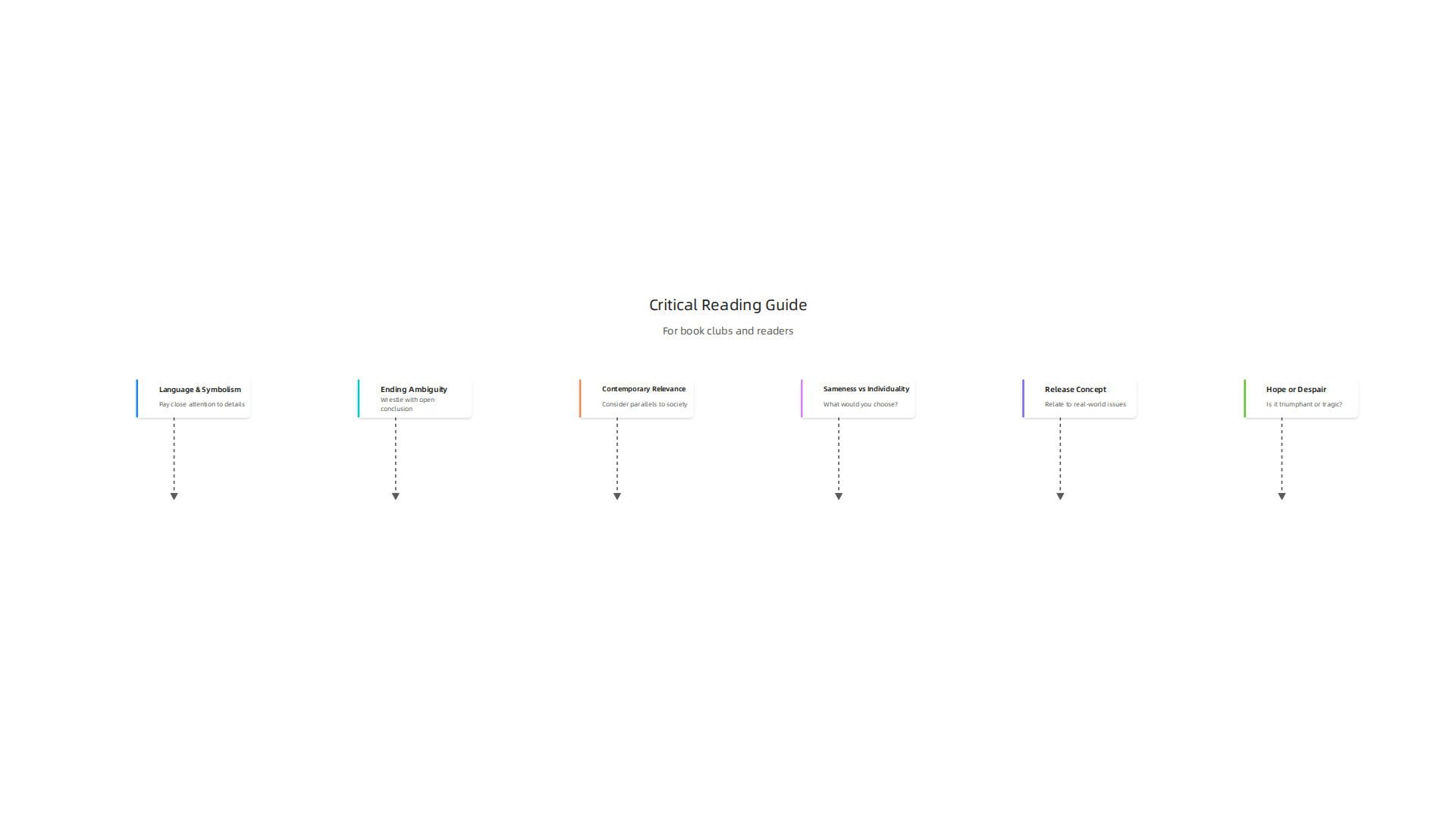
First, pay close attention to Lowry’s use of language and symbolism. Every detail means something. Why is there no color? Why does Jonas have pale eyes? The community is literally gray. Lowry uses that grayness to show a world without emotion, without depth. In real life, we make decisions based on feelings. In Jonas’s world, feelings are suppressed. You can start a conversation by asking, “What does the lack of color say about their humanity?” A great resource for this is the discussion guide from StartsAtEight, which breaks down how the colorless activity mirrors the community’s emotional numbness. Also, think about the apple. The first time Jonas sees it change, he is seeing a glimpse of reality. That small, strange moment is the crack in the perfect world.
Second, you have to wrestle with the ending’s ambiguity. Does Jonas survive? Does he reach Elsewhere? Lowry leaves it wide open. Some readers feel hope. Others feel loss. The ReadingGroupGuides discussion questions ask readers to decide whether the ending is happy or tragic. That is not a mistake. Lowry wants you to bring your own life experience to the story. If you read it at twelve, you might have seen a triumphant escape. If you read it as an adult, you might see a tragic, desperate gamble. Both readings are valid. That is the mark of a book that grows with you.
Third, consider the novel’s relevance to contemporary society. Jonas’s community gave up freedom for safety. Sound familiar? We live in a world where algorithms decide what we see, where surveillance is normal, and where comfort often wins over courage. Discussing these parallels can deepen your understanding. You might ask, “What do we suppress in our own lives for the sake of a smooth routine?” or “Is our world really that different?” The Cru Trinidad & Tobago discussion guide offers thought-provoking prompts about whether people always choose wrong. The book forces you to examine your own choices.
If you are part of a book club, these three angles can fuel hours of conversation. And if you are reading solo, they turn a simple story into a mirror. For more novels that blend deep themes with wild imagination, check out our list of modern fiction for genre readers where you will find crossover stories that challenge the way you think.
Now, here is the real question. After all this analysis, what will you do with what you have learned? If you are hungry for a series that plays with identity, reality, and dark comedy in the same daring way, I have a recommendation. The Ridiculous blends sci-fi and heart while asking: what happens when you lose your grip on truth? It is the perfect next step for a reader who wants to keep questioning. Start your strange adventure here.
Discussion Questions for Your Next Book Club Meeting
Once you start looking closely, your book club needs the right questions to keep the conversation alive. The best discussions do not just retell the plot. They force everyone to take a side. Here are three questions that always spark debate.
What would you choose: sameness or individuality? Jonas’s community gave up color, emotion, and personal choice for total safety. Is that a fair trade? Most readers say no right away. But ask yourself honestly. If sameness meant no war, no hunger, and no pain, would you really say no? The discussion guide from StartsAtEight digs into this exact tension. It helps groups talk about what we actually value versus what we say we value.
How does the concept of ‘release’ relate to real-world issues? In Jonas’s world, release means killing the old, the weak, and the imperfect. It sounds like a nightmare from another planet. But the questions from Cru Trinidad & Tobago push readers to see the connection. They ask whether people always choose the easy, harmful path. Think about euthanasia, capital punishment, or how we treat the elderly today. The parallels are uncomfortable. That is the point.
Is the ending hopeful or despairing? This question splits every room. Does Jonas survive? Does he reach Elsewhere? The ReadingGroupGuides discussion questions leave the answer open on purpose. Some see a triumphant escape into music and love. Others see a dying boy hallucinating in the snow. Both readings change the entire meaning of the book. Let your group argue it out.
These three angles will turn your meeting into a real debate. If your club wants more novels that challenge the way you think, check out our list of fantasy and sci-fi book club books that spark real discussion. And if you need a funny, wild book to lighten the mood after all this heaviness, grab The Ridiculous. It is a fast, absurd adventure for readers who want fiction with wit. Perfect for a book club palate cleanse.
Summary
This article explains why Lois Lowry’s The Giver remains a vital work of YA dystopian fiction in 2026, unpacking its tightly controlled setting, key rituals like the Ceremony of Twelve, and the novel’s central themes of memory, choice, and individuality. It traces how Jonas’s role as Receiver exposes the cost of a painless, colorless society and shows how that quiet moral wake-up call influenced later YA blockbusters. The piece covers the book’s reception—awards, classroom use, challenges and bans—and compares Lowry’s approach to classics like 1984 and Brave New World. Readers will get practical guidance for close reading and book-club discussion, sample questions that provoke debate about the ending and ethics, and reading recommendations for books that continue the conversation about freedom and identity.