

Introduction: Why Finding the Perfect Book Club Read for Genre Fans Is Harder Than It Looks
You know the feeling. You sit down with your book club, and someone suggests Into the Wild.

Or maybe a classic like Life of Pi. Great books, sure. But your group wants dragons. Or spaceships. Or a deep dive into a unique magic system.
Finding the right book club books when you love fantasy and science fiction is a real challenge. Most generic lists ignore these genres. They focus on literary fiction, historical drama, or mainstream thrillers. You might see a Kurt Vonnegut book on a list from time to time. But where are the sprawling epics and dark fantasy worlds?
It gets frustrating fast.
Why it is so hard to find the right read
The main problem is information overload. Big websites use algorithms to suggest books. But these algorithms miss niche tastes. They keep pushing the same popular titles over and over.
According to the 2026 State of Reading Report from Fable, readers are finishing more books than ever. Finding the next one is still a struggle. Meanwhile, standard book club roundups, like the Bookclubs’ most anticipated book releases of 2026, lean heavily towards romance, thrillers, and real-world stories.
What about deep worldbuilding? What about big ideas that spark real debate? Standard lists do not offer that. They miss the discussion potential that makes fantasy and sci-fi so great.
This guide changes everything
We built this guide specifically for genre fans like you. No more forcing a square peg into a round hole. We offer curated strategies and research-backed picks that actually work for fantasy and sci-fi book clubs.
Expect recommendations that create real conversations. From hidden indie gems to the best new releases of the year. For extra help, check out our guide on fantasy series recommendations for your next epic adventure after Percy Jackson if your group loves a fast pace.
Let’s find books your group will actually be excited to talk about.
Why Traditional Book Club Lists Fail Fantasy Readers
You have probably seen it happen. Someone brings a list of "best book club books" to the meeting. It includes a classic like Life of Pi or maybe a Kurt Vonnegut book. These are fine stories. But they do not scratch the itch for a deep magic system or a tense space battle.
The problem is not the books themselves. It is the system that picks them. Most mainstream book club lists follow a simple formula. They focus on literary fiction, big bestsellers, and feel good stories. The Bookclubs’ most anticipated book releases of 2026 show what I mean. The list is full of romance, thrillers, and historical drama. There is almost nothing for someone who loves dragons or dystopian worlds.
Why does this happen? It comes down to two main issues.
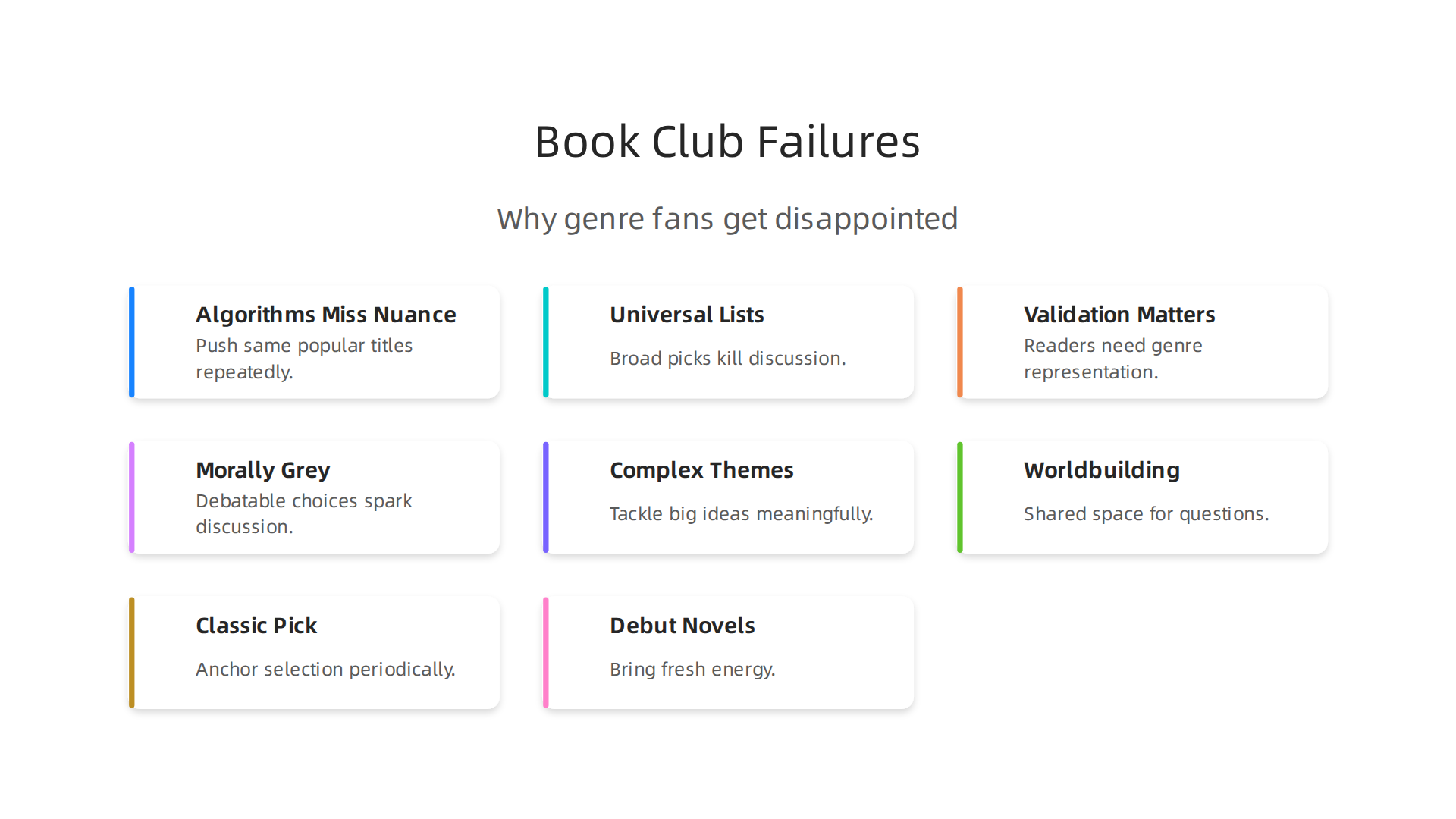
First, algorithms miss nuance.
Big websites want to sell books to everyone. Their recommendation engines push the same popular titles over and over. If you search for book club books, you get Into the Wild and Charlie and the Chocolate Factory every time. These are great reads. But they lack the layered worldbuilding and complex ideas that make for good discussion in a fantasy or sci-fi group.
The 2026 State of Reading Report from Fable found that readers finish more books than ever, but still struggle to find what they truly want. General lists do not solve that. They give you a broad net, not a targeted hook.
Second, one size fits all kills discussion.
A great book club book for genre fans needs specific things. It needs big ideas you can debate. It needs a unique setting you can explore. It needs characters whose choices spark real arguments.
Standard lists ignore all of that. They pick books that are "safe" or "universal." But universality is boring. When your group reads a novel with a flat, real world setting, the conversation often stalls after five minutes.
What makes the conversation spark? Think about the books that keep the group arguing for an hour. That is what happens with award winning sci-fi novels that tackle sentient AI and genetic mutations. Those books demand discussion. They offer no easy answers.
Validation matters more than you think.
Here is something most lists miss. Readers feel validated when they see their favorite genres represented. If you love comic fantasy or dark magic, you want a list that says "this is for you." Not "this is close enough."
When your book club picks a genre specific title, everyone feels seen. That feeling boosts engagement. Members are more likely to finish the book and come ready to talk. The reading experience becomes better for the whole group.
So what can you do now?
Stop relying on generic lists. Start looking for sources that understand your taste. Check out our guide on modern fiction for genre readers if your group wants stories that blend literary style with speculative depth.
The next section of this guide will show you exactly how to find book club books that fit your group’s vibe. No more forcing a list into your lap. You get picks that actually work.
What Makes a Fantasy or Sci-Fi Book ‘Book Club Ready’?
Not every genre book works for a book club. You need more than a cool magic system or a thrilling space chase. You need a story that gives your group something to argue about.
So what separates a quick read from a great discussion book? It comes down to three things.
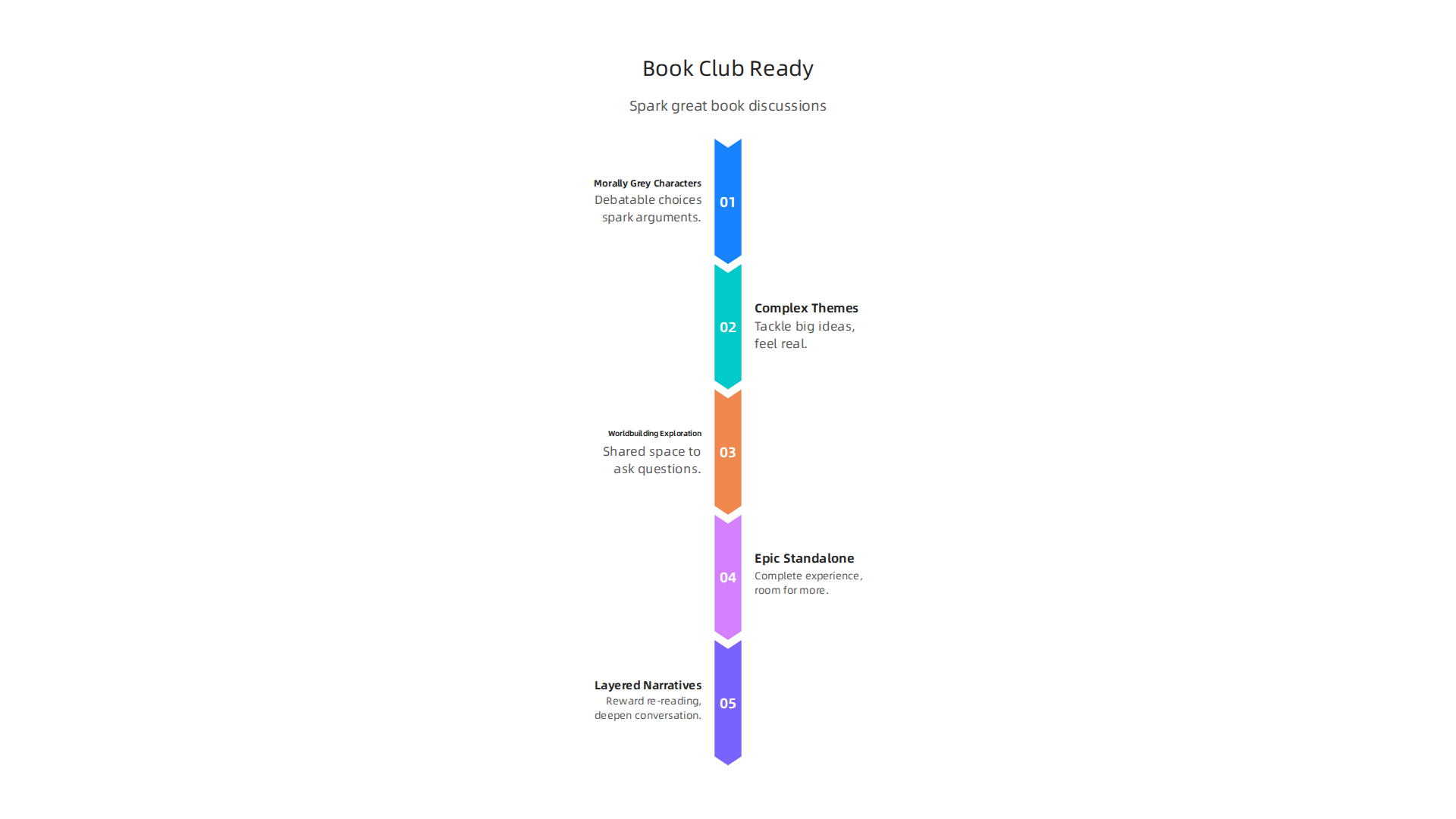
Morally grey characters you can debate.
Think about the characters that keep you talking. The ones who make hard choices. The ones who are not all good or all bad.
A character like Jay Kristoff’s Gabriel de León in Empire of the Damned is a perfect example. He fights for survival but makes brutal decisions. Your group will argue about whether he is a hero or a monster. That kind of debate is gold for a book club.
Stories with clear heroes and villains rarely spark long conversations. Morally ambiguous characters force everyone to take a side. And that is where the fun begins.
Complex themes that feel real.
A good book club book for genre fans needs to tackle big ideas. Think about a sci-fi novel that explores sentient AI or genetic engineering. Or a fantasy book that digs into power, oppression, or identity.
When your group reads a book like The Ministry of Time by Kaliane Bradley, you are not just talking about time travel. You are discussing memory, belonging, and how people connect across differences. The best speculative fiction of 2025 shows how many recent releases blend genre thrills with deep questions.
The goal is to find books where the theme feels part of the story, not tacked on. If the theme can be summarized in one sentence, it is probably too simple.
Worldbuilding that invites exploration.
Here is a secret about great book club discussions. They often start with the world itself.
When everyone in your group imagines the same city, the same magic system, or the same alien culture, you share a common space to explore.

That shared world makes it easier to ask questions. Why did the author design it that way? What would it feel like to live there?
The classic example is Dune. The desert planet of Arrakis is not just a setting. It drives the politics, the religion, and the conflict. Your group can spend an entire meeting just talking about the world. The same happens with A Game of Thrones or The Lord of the Rings. These are books that feel alive.
The sweet spot between epic and standalone.
Serialized epics can work for book clubs, but they come with a risk. If the book is part of a six volume series, new readers feel lost. They spend half the meeting asking about earlier books.
The best book club books for genre fans are either standalone novels or the first book in a series. They give you a complete experience while leaving room for more. Titles like The Tainted Cup by Robert Jackson Bennett or The Book that Broke the World by Mark Lawrence hit that sweet spot. They are rich enough to discuss, but self contained enough for new readers.
Groups like the SciFi and Fantasy Book Club on Goodreads thrive on this balance. They pick books that reward deep reading without demanding a huge time commitment.
Layered narratives that reward re reading.
Finally, a book club book should have hidden layers. Foreshadowing, symbols, and multiple meanings. These elements make the book better the second time through.
When a story rewards re reading, your group will naturally compare notes. Someone spots a clue on page 50 that connects to the ending. Another reader catches a theme they missed. The conversation deepens.
That is the magic of a truly book club ready fantasy or sci-fi novel. It keeps giving even after you finish.
So as you search for your next group read, ask yourself. Does this book have characters I can argue about? Themes that make me think? A world I want to explore? If yes, you have a winner.
For more curated options that fit this exact mold, check out our list of modern fiction for genre readers. It is full of crossover novels that blend literary depth with speculative imagination.
Top 10 Fantasy & Sci-Fi Book Club Picks for 2026
You already know what makes a book click for your group. Morally grey characters. Themes that hit home. A world you can sink into. Now you need the actual titles. The books that will get your friends talking, arguing, and maybe even re reading.
Here are ten of the best book club books for genre fans in 2026. I picked each one for its discussion potential. I also thought about group size. Some work better with five people. Others shine with fifteen.
Let’s get into it.
1. Empire of the Damned by Jay Kristoff
This is the sequel to Empire of the Vampire, and it delivers everything your group wants. Gabriel de León is back. He is a broken, brutal vampire hunter who makes terrible choices for good reasons. Your club will argue about whether he is redeemable. The dark fantasy world is rich with religious symbolism and moral questions.
Ideal club size: 6 to 10 people. The debates get heated fast.
2. The Ministry of Time by Kaliane Bradley
A time travel story that is really about belonging. A British civil servant guides a 19th century explorer through modern London. The book blends sci-fi, romance, and political commentary. Your group will discuss colonialism, identity, and what it means to adapt.
This was named one of the top reads of 2024 by Fantasy & Beyond, and it is perfect for clubs that love genre bending novels.
Ideal club size: 4 to 8 people. The themes are deep enough for intimate conversation.
3. The Tainted Cup by Robert Jackson Bennett
A fantasy murder mystery with a genius detective and her loyal assistant. The world is filled with alchemical mutations and a society built on parasites. Your group will love piecing together clues. The moral dilemmas about power and exploitation are endless.
The Best Sci-Fi & Fantasy Novels list from Five Books highlights Bennett as a must read author in 2026.
Ideal club size: 5 to 12 people. The mystery element keeps everyone engaged.
4. The Book that Broke the World by Mark Lawrence
Mark Lawrence returns with a metafictional fantasy that plays with storytelling itself. Characters discover they are inside a book. The questions about free will, authorship, and reality are perfect for a book club. This book was featured by Grimdark Magazine as one of the best of 2024.
Ideal club size: 4 to 8 people. The philosophical angle works best with a thoughtful group.
5. Dune by Frank Herbert
Yes, it is a classic. But have you actually read it with your club? The political intrigue, ecological themes, and religious commentary are still fresh. The recent movies made it popular again. Your group will debate Paul Atreides as a hero or a tyrant.
This is a staple on the NPR top 100 Fantasy/Sci-Fi list.
Ideal club size: 8 to 15 people. Big groups handle the sprawling world well.
6. A Game of Thrones by George R.R. Martin
Same reasoning as Dune. The TV show is over, but the books are still amazing for discussion. The choices about honor, power, and survival are endless. Your group will take sides on Stark vs. Lannister ethics.
Ideal club size: 6 to 12 people. The character list gives everyone someone to root for or against.
7. Ender’s Game by Orson Scott Card
A sci-fi classic that asks hard questions about childhood, violence, and empathy. Your group will argue about whether Ender is a victim or a killer. The battle school setting is fun, but the moral weight is heavy.
Ideal club size: 4 to 10 people. The short length makes it easy for busy clubs.
8. The Tusks of Extinction by Ray Alton
A space opera about cloning extinct megafauna and the ethics of resurrection. Your group will discuss conservation, capitalism, and the limits of science. The action is fast, but the questions stick.
Ideal club size: 5 to 8 people. The specific theme works best with curious readers.
**9. *Kurt Vonnegut’s Slaughterhouse-Five
Wait, is this fantasy or sci-fi? Yes. It is both. Vonnegut blends time travel, war trauma, and alien abduction into one unforgettable novel. Your group will talk about fate, free will, and the absurdity of war.
This is a great pick if you want to try a book like Michael Crichton but with a literary twist.
Ideal club size: 4 to 8 people. The short chapters make it easy to discuss.
10. The Hunger Games by Suzanne Collins
It is YA, but it works for adult clubs. The themes of class warfare, media manipulation, and trauma are more relevant than ever. Your group will debate Katniss’s choices and the cost of rebellion.
If your club likes this, check out our similar YA speculative fiction picks.
Ideal club size: 5 to 12 people. The fast pace keeps everyone reading.
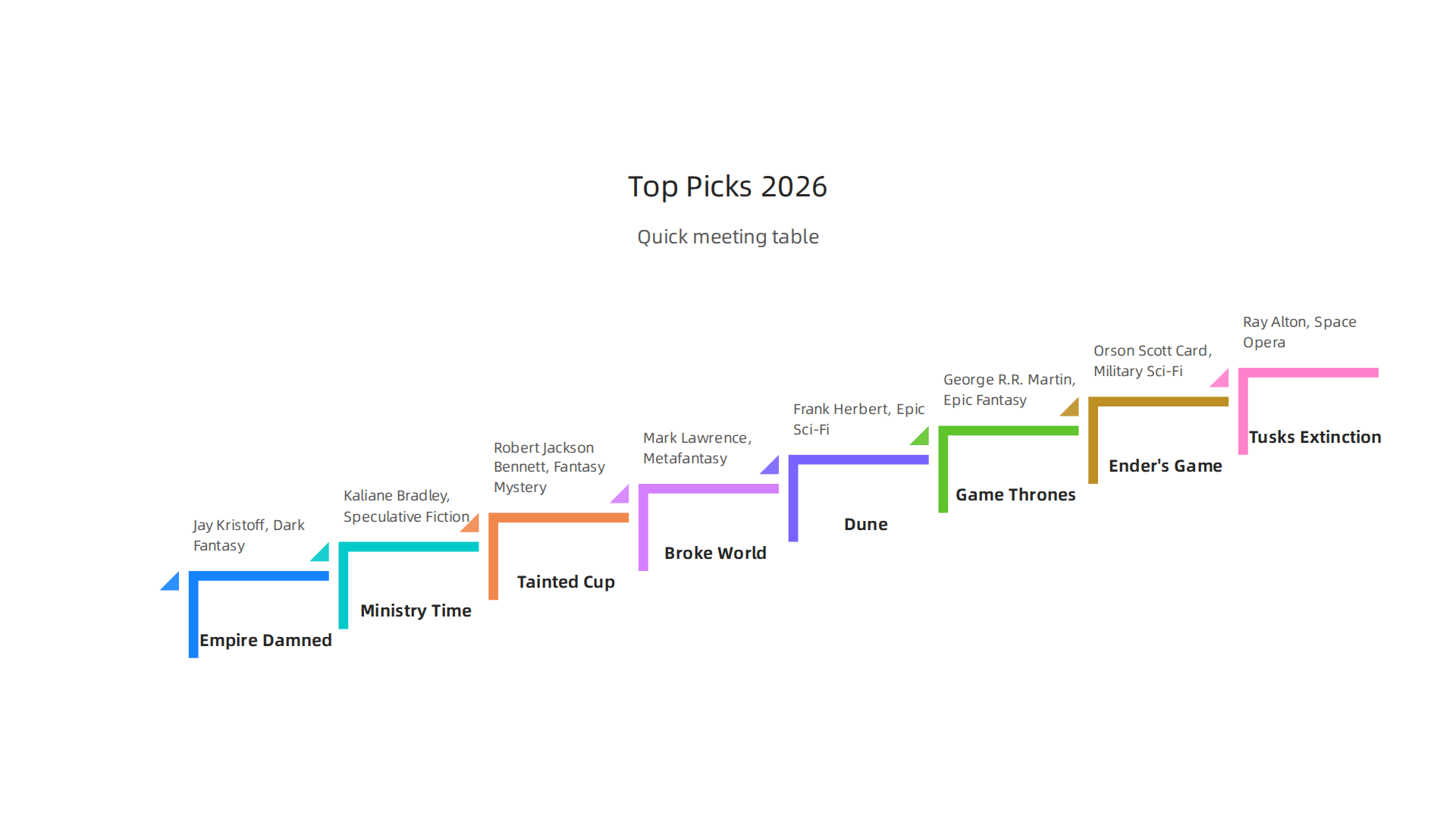
**A quick table for your next meeting.
**
| Book | Author | Genre | Ideal Club Size |
|---|---|---|---|
| Empire of the Damned | Jay Kristoff | Dark Fantasy | 6 to 10 |
| The Ministry of Time | Kaliane Bradley | Speculative Fiction | 4 to 8 |
| The Tainted Cup | Robert Jackson Bennett | Fantasy Mystery | 5 to 12 |
| The Book that Broke the World | Mark Lawrence | Metafantasy | 4 to 8 |
| Dune | Frank Herbert | Epic Sci-Fi | 8 to 15 |
| A Game of Thrones | George R.R. Martin | Epic Fantasy | 6 to 12 |
| Ender’s Game | Orson Scott Card | Military Sci-Fi | 4 to 10 |
| The Tusks of Extinction | Ray Alton | Space Opera | 5 to 8 |
| Slaughterhouse-Five | Kurt Vonnegut | Literary Sci-Fi | 4 to 8 |
| The Hunger Games | Suzanne Collins | YA Dystopian | 5 to 12 |
One more thing.
These ten books are just a starting point. The real joy is finding what clicks for your specific group. Some clubs love dark fantasy. Others prefer light space opera.
For more curated options that mix genre depth with book club appeal, browse our modern fiction for genre readers. It is full of crossover novels that blend literary weight with speculative imagination.
Your next great discussion is waiting.
How to Curate a Diverse Reading List for Your Club
You have ten great book club books to start with. But a great club does not stop at one list. The best groups keep things fresh by mixing things up. They avoid the trap of reading the same kind of story over and over.

Here is why diversity in your reading list matters. And how to build one that keeps everyone excited.
Diversity in author identity matters.
Your group gets richer conversations when you read voices from different backgrounds. Authors like Deepa Anappara, whose new novel The Last of Earth is one of the most anticipated book club books of 2026, bring perspectives that Western fantasy often misses. The same goes for Wizard of the Crow by Ngũgĩ wa Thiong’o, a masterpiece that blends magical realism with African politics. Your club can talk about how culture shapes storytelling.
Mix up protagonist representation too.
If every book you read features a straight white male hero, your discussions will feel stale. Pick books with protagonists who are different from your members. Think about gender, race, sexuality, and ability. A book like Life of Pi forces you to see survival through a young Indian boy’s eyes. Into the Wild gives you a real-life character who rejects society. These shifts change how your group debates themes.
Vary your subgenres.
Do not stick to epic fantasy every month. One month try a space opera. The next try a murder mystery like The Tainted Cup. Then try a literary classic like Kurt Vonnegut books such as Slaughterhouse-Five. The Pan Macmillan list of book club favorites includes everything from historical fiction to horror. Your club needs that variety to stay sharp.
Include shorter formats.
Novellas and short story collections are perfect for busy months. They let your group finish a complete story without the pressure of a long novel. Check out our guide to finding short story collections that match your taste for ideas.
Add translated works.
Reading books from other countries opens your world. You get new storytelling styles and cultural contexts. Look for translated speculative fiction on lists like The Reading List 2026 from Seattle Bibliocommons.
Balance classics and debuts.
Your club needs anchors like Dune or A Game of Thrones. But also support new voices. Debut authors bring fresh energy. Rotate between tried and true titles and emerging writers. The BookBrowse list of the best books for book clubs in 2026 is full of debut novels that deserve a spot on your shelf.
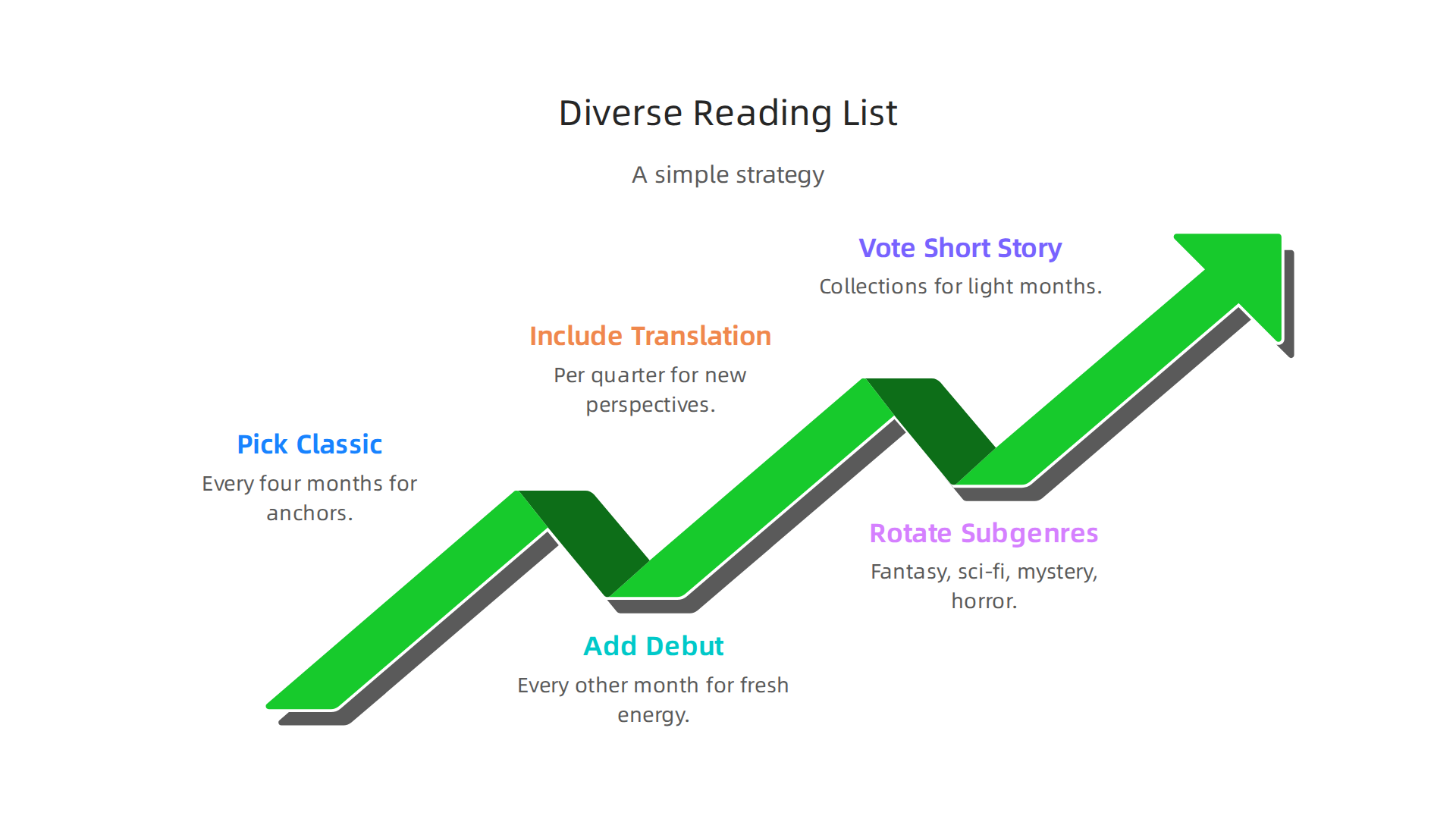
**A simple strategy to follow.
**
- Pick one classic every four months.
- Add one debut novel every other month.
- Include one translated work per quarter.
- Rotate subgenres: fantasy, then sci fi, then mystery, then horror.
- Let your members vote on short story collections for light months.
For more curated options that mix literary weight with speculative imagination, browse our collection of modern fiction for genre readers. It is full of crossover novels that will expand your club’s horizons.
Where to Find Underrated Gems for Speculative Fiction Clubs
You know how to build a diverse reading list for your club. But where do you find the books that nobody else is talking about? The hidden ones. The ones that make your members say, "Wow, I never would have found this on my own."
Here is where to look.
Start with genre awards.
Awards are not just for bragging rights. They surface books that publishers and critics believe are truly excellent. The British Book Awards recently crowned a Science Fiction & Fantasy Book of the Year for 2026 that your club might have missed. The same goes for the Arthur C. Clarke Award and the World Fantasy Award. Every year, these lists introduce readers to fresh voices and bold ideas.
You can also go deeper. The award-winning sci-fi novels of 2025 cover sentient AI and genetic mutations. These are perfect conversation starters for your club. Shortlists are just as valuable as winners. A book that made the final cut is often worth your time.
Use online communities for crowd-tested picks.
Reddit is a goldmine for underrated speculative fiction. Subreddits like r/Fantasy and r/printSF have devoted readers who love sharing hidden treasures. You can search for threads asking for "underrated fantasy" or "books like life of pi book" and get dozens of real, honest recommendations.
These communities also host annual awards like the Self-Published Fantasy Blog-Off (SPFBO). That contest has launched careers for authors who were completely unknown. Your club could be the first to read a future star.
Subscribe to niche blogs and newsletters.
Big media outlets cover the same big books. But niche blogs and Substack newsletters dig into the corners. Publications like Grimdark Magazine publish yearly roundups of the best fantasy, horror, and sci-fi books that mainstream sites ignore. Following three or four such sources will give your club a steady stream of fresh options.
Listen to genre-specific podcasts.
Podcast hosts often interview debut authors or discuss books they discovered at small presses. One YouTube creator shared a personal book awards video that highlights exactly the kind of unusual reads your club craves. These personal recommendations feel more trustworthy than algorithm-driven lists.
Check genre-forward book previews.
Before the year even starts, literary sites publish previews of upcoming releases. The 2025 preview from Literary Hub featured 20 anticipated sci-fi and fantasy books that included murder ballads with robots and magic school stories. These lists help your club plan months ahead and snag titles before they become mainstream.
Do not overlook crossover classics.
Sometimes an underrated gem is just a book your club never thought to try. A classic like Into the Wild is not speculative fiction, but its themes of survival and isolation fit perfectly in a discussion about human nature. If your club wants to blend genres, explore our guide to modern fiction for genre readers. It is full of crossover novels that bridge literary and speculative worlds.
A quick strategy for your club.
- Assign one member each month to find a book from an award shortlist.
- Set up a shared spreadsheet where members post recommendations from niche blogs.
- Rotate the responsibility of checking the SPFBO winner list each year.
Your club does not need to rely on the same bestseller lists everyone uses. With the right sources, you will always have something surprising and worth discussing.
Facilitating Engaging Discussions: Tips for Fantasy Book Clubs
You found the perfect list of underrated books for your club. But now comes the hard part. How do you get everyone talking about them in a way that feels alive and not like a school assignment?

Here is the trick. Great discussions about speculative fiction start with questions that match the genre. General questions work, but genre-specific ones hit harder.
Discussion questions for speculative fiction clubs.
Start with the world. In fantasy and sci-fi, the setting is almost a character itself. Ask your group: How did the author build this world? What rules does the magic or technology follow? Did the worldbuilding logic hold up for you? The Ultimate List of Book Club Discussion Questions from Bookclubs has great sci-fi specific questions about world creation and technological predictions.
Simple questions like "What character did you relate to most?" can unlock surprising insights, as Everyday Reading suggests. This works especially well in speculative fiction because characters often face situations no real person ever would.
Then move to character morality. Speculative fiction often puts characters in impossible situations. Think about a classic like Charlie and the Chocolate Factory. The kids face moral tests that feel extreme but relatable. Ask your club: What would you have done in that situation? Who made the wrong choice and why? For clubs that love debating character decisions, our guide to books with intense rivalries offers more fuel for these debates.
Now go deeper with thematic parallels. Kurt Vonnegut books like Slaughterhouse-Five use sci-fi to ask big questions about time and fate. The Life of Pi book mixes survival with spirituality. Ask your club: What big idea is this book really about? Does it predict something about our future? The ACFW recommends using layered questions starting at the story level and going deeper. This way, every member can engage at their comfort level.
Even crossover classics work well here. The Into the Wild book is not speculative, but its themes of isolation and survival fit perfectly in a discussion about post-apocalyptic fiction.
Activities that deepen engagement.
Sometimes talking is not enough. Try these hands-on activities.
Map analysis. Fantasy novels often come with maps. Ask members to trace character journeys and discuss how geography shapes the plot. This works great for epic fantasy like Tolkien or George R.R. Martin.
Glossary creation. Have members invent new terms for the world you read. What would a magic system glossary look like? This is fun for hard sci-fi and high fantasy where specialized vocabulary matters.
Alternate-ending debates. This is a classic for a reason. Ask: What if the hero made a different choice? How would the world change? This ties back to character morality and sparks the longest conversations.
Handling spoilers and genre knowledge.
This is a big one. Not everyone in your club reads speculative fiction all the time. Some members might be new to the genre. The ALA book discussion guide suggests starting with how members experienced the book, not with technical genre details.
Set a spoiler policy. For example, agree that no one reveals plot twists from after chapter five until after the main discussion. This keeps surprises alive for slower readers.
Manage differing knowledge levels by having a simple rule. The person who knows the most about the genre explains terms only when asked. This keeps discussions welcoming for everyone.
Your club already has the books. Now you have the tools to make every meeting memorable.
Summary
This article helps fantasy and science‑fiction fans stop settling for generic book club picks and start choosing novels that spark real conversation. It explains why mainstream lists and algorithms often miss genre nuance, then defines the criteria that make a speculative novel