
Introduction: Rediscovering Dickens Through a Speculative Lens
Have you ever scrolled through endless book lists feeling like nothing grabs you?

You are not alone. In 2026, readers face a real problem. There are just too many books and not enough time. Research shows that fantasy and science fiction reading drops over time as readers get older, going from about 22% down to 18% of what people pick up. Many readers get stuck in a loop, always reaching for the same kind of story.
But here is something surprising. Some of the best charles dickens books are actually full of the same wild imagination you love in modern speculative fiction. His novels have ghosts, time travel, magical transformations, and vivid dream sequences. They feel strange and alive in ways that match the best classic fantasy books and literary fiction books you already enjoy. If you have ever wondered whether old classics could feel fresh and exciting, the answer is yes.
The problem is that most of us do not know where to start. Do you pick up a thick novel like Bleak House or dive into A Christmas Carol first? The information overload that makes it hard to find your next great read applies to classic literature too. You might have spent hours searching for the great gatsby pdf or trying to figure out harry potter books in order, and now you are curious about Dickens but unsure which book fits your taste.
That is exactly why this article exists. I want to help you see Dickens the way fans of modern fantasy and sci-fi see their favorite worlds. His stories are full of strange coincidences, supernatural twists, and characters who go through unbelievable changes. He wrote about social problems and deep emotions, but he also wrote about haunted houses, ghosts, and people who see visions. That sounds a lot like the speculative fiction you already love.
By the end of this guide, you will know exactly which charles dickens books to pick first based on your current reading habits. You will see how his work connects to the fantasy and sci-fi you already enjoy. And you might just find your next unforgettable read hiding in a place you never expected.
Ready to start? If you love discovering new worlds that bend the rules of reality, check out our Browse Recommendations to explore more curated lists.

The Fantastical Elements Hidden in Dickens’ Classics
Here is the thing about Charles Dickens. Look past the dusty school reading lists and you will find a writer who loved ghosts, hauntings, and strange coincidences as much as any modern fantasy fan. His charles dickens books are packed with elements that feel right at home in classic fantasy books and literary fiction books today.
Dickens grew up hearing ghost stories around the fire during Christmas. That childhood wonder never left him. According to the Dickens Museum, he had a genuine curiosity about the supernatural and a deep love of ghost stories, even though he did not actually believe in ghosts. He was fascinated by why we believe in spirits and what those beliefs say about us. The UC Santa Cruz Dickens Project explains that Dickens was intrigued by our belief in ghosts, and that paradox opened the door for him to write about them.
So how does this show up in his novels? Let me give you three clear examples.
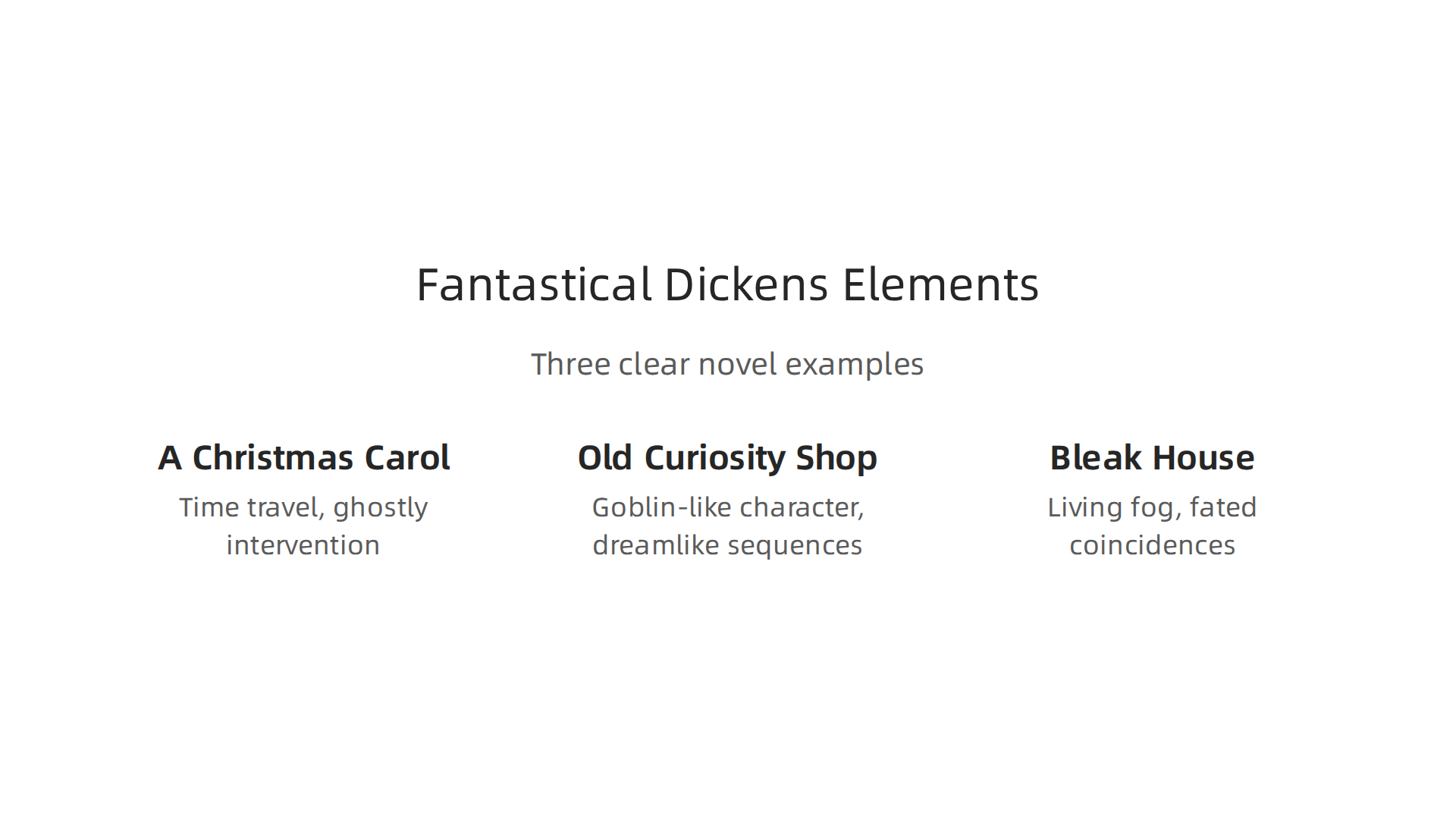
A Christmas Carol is the most obvious one. A miser gets visited by four spirits who show him his past, present, and future. That is time travel and ghostly intervention wrapped into one story. Marley’s ghost rattling his chains, the Ghost of Christmas Yet to Come pointing silently at a tombstone, Scrooge waking up transformed. It reads like a supernatural thriller with a happy ending. The Harry Potter books in order have plenty of ghosts and magical transformations too, but Dickens got there first.
The Old Curiosity Shop takes a darker turn. The character of Quilp feels like a goblin straight out of folklore. He is small, cruel, and almost inhuman in his behavior. The novel is full of dreamlike sequences where reality bends. Little Nell wanders through a landscape that feels like a dark fairy tale, meeting strange characters who seem pulled from a nightmare. The Historic UK article notes that Dickens used ghosts and supernatural elements to reflect sensory experiences rather than far fetched fantasy, grounding them in human emotion.
Bleak House might seem like a straightforward legal drama at first. But look closer. The fog that opens the novel is almost a living presence, smothering London like a curse. Coincidences pile up in ways that feel fated. Characters appear and disappear like phantoms. The whole story operates on a logic that feels less like real life and more like a strange dream where everything connects in mysterious ways. Research published in Rupkatha Journal explores how Dickens evolved his use of supernatural themes, moving from simple ghost stories to more complex atmospheric hauntings.
What does this mean for you as a fantasy and sci fi reader? It means Dickens was doing world building long before the term existed.

He created atmospheric settings that feel alive. He filled them with quirky, larger than life characters. And he used supernatural twists to explore real human emotions like fear, hope, and redemption.
If you love discovering new worlds that blend the strange and the familiar, you might also enjoy exploring our fantasy series recommendations for your next epic adventure. And if you are ready to pick your first Dickens novel based on your current reading taste, keep going. The next section shows you exactly which book to start with.
How Dickens’ Narrative Techniques Mirror Modern Fantasy
So you now know Dickens loved ghosts and dreamlike worlds. But his storytelling methods also feel a lot like the fantasy series you read today. Let me show you how his writing techniques line up with modern speculative fiction.
First, think about how many fantasy books are released in series. You finish one book and the story ends on a huge cliffhanger. You have to wait months for the next one. Dickens did the same thing more than 150 years ago. He published most of his novels in monthly or weekly installments in magazines. According to Wikipedia, Dickens was a pioneer of serial publication. Each chapter ended with a twist or a dramatic moment that made readers desperate for the next issue. Sound familiar? It is exactly how George R.R. Martin or J.K. Rowling keep you hooked across multiple books.
Second, look at the size of his stories. Dickens wrote novels with huge casts of characters and multiple plotlines that weave together. Think of Bleak House with its lawsuit that connects dozens of people, or Our Mutual Friend with its river, dust heaps, and tangled relationships. This approach is a direct forerunner of epic fantasy storytelling. Research from the London School of Journalism notes that Dickens used dramatic and literary techniques that made his narratives feel alive and sprawling, much like a modern fantasy saga. If you love getting lost in a world with many characters and interconnected stories, you already appreciate Dickens’ style.
Third, consider the themes. Dickens wrote about poverty, injustice, and personal transformation. Ebenezer Scrooge changes his entire life. Pip in Great Expectations learns what really matters. These are the same kinds of emotional arcs that drive the best fantasy and science fiction. The Literary Hub article on contemporary Dickensian novels explains that his genius is descriptive, that he can describe a thing so clearly it becomes real. That is exactly what world building does in fantasy. He makes you feel the cold fog of London or the warmth of a Christmas feast.
If you enjoy stories where the setting feels like a character and where social issues matter, Dickens belongs on your shelf. He is not just a dusty classic author. He is a master storyteller whose techniques shaped the genre you love.
Now that you see the connection, the only question is where to start. If you want to find more books with rich worlds and deep characters, check out our fantasy series recommendations for your next epic adventure. And if you are ready to explore Dickens himself, keep going to the next section. It matches your current taste to the perfect first novel.
Top Charles Dickens Books for Speculative Fiction Enthusiasts
So you now see how Dickens’ storytelling connects to modern fantasy. The big question is: which charles dickens books should you read first? Here are the best novels for someone who loves speculative fiction. I picked each one based on its fantastical elements, how easy it is to read, and the themes that will feel familiar to a fantasy fan.
A Christmas Carol (1843)
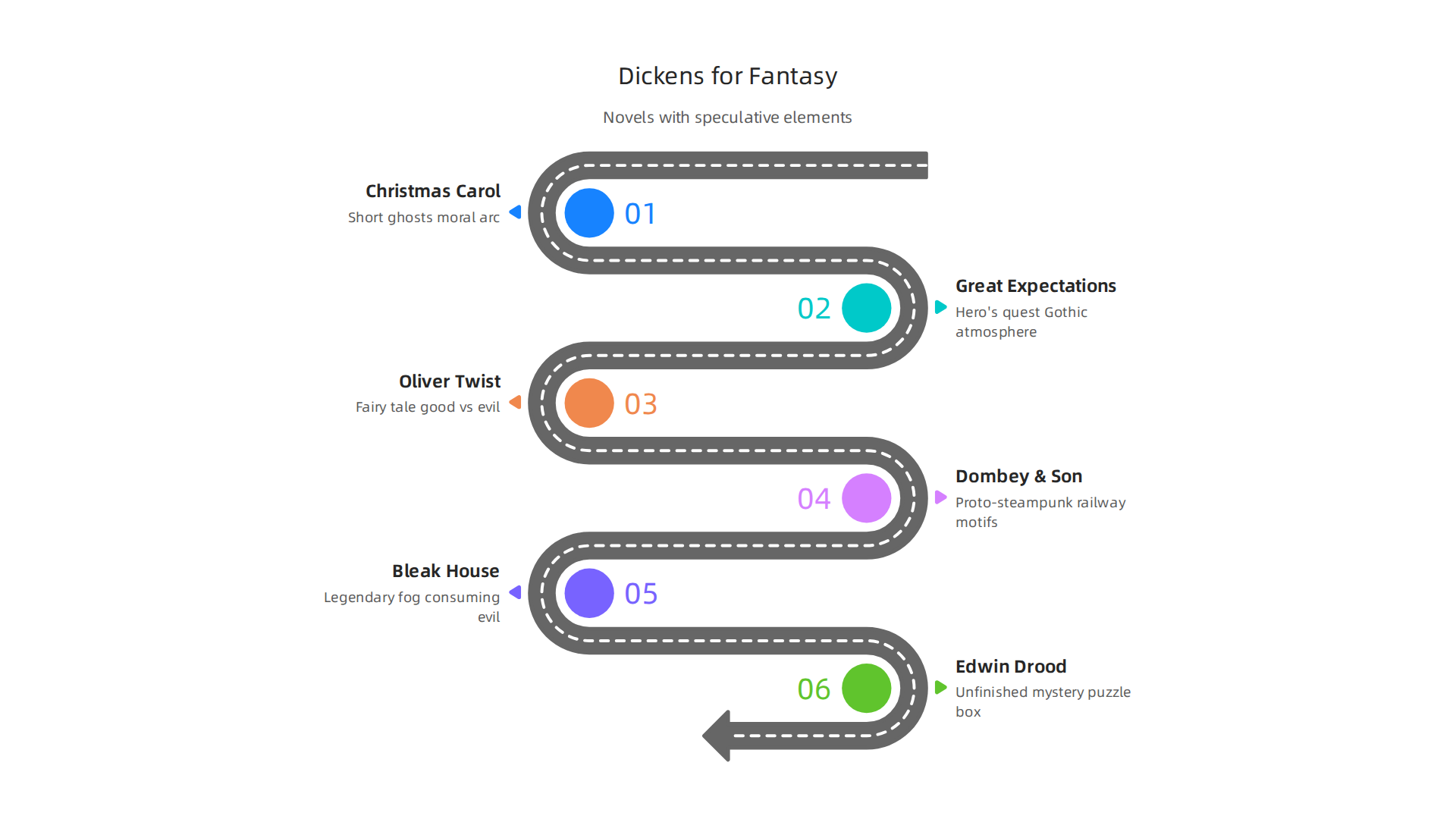
This is the most obvious pick. Three ghosts visit Ebenezer Scrooge on Christmas Eve. They show him his past, present, and future. The whole story is a supernatural journey. Dickens was fascinated by ghosts and our belief in them, as the Charles Dickens Museum points out. The Historic UK article on Dickens and the supernatural notes that his ghosts are sensory and grounded, not cartoonish. If you love ghost stories or time-bending tales, this is your starting point. It is also short and easy to finish in an afternoon.
The Mystery of Edwin Drood (1870)
Here is the lesser-known gem. Dickens died before finishing this novel. It is a murder mystery with a surreal, haunting atmosphere. The story takes place in a cathedral town with opium dens, hidden identities, and a possible supernatural twist. Scholars still debate what really happened. For a speculative fiction reader, this feels like a dark fantasy puzzle. The UC Santa Cruz article on Dickens and mesmerism explains that Dickens was deeply interested in hypnotism and altered states of mind, which color this book. It is a perfect pick if you like unsolved mysteries and eerie settings.
A Tale of Two Cities (1859)
This one does not have literal ghosts. But it has resurrection, doppelgängers, and a world split between London and Paris during the French Revolution. The theme of being "recalled to life" runs through the whole story. For fantasy readers, this is like a historical fantasy with high stakes, sacrifice, and a dramatic ending. The Pan Macmillan guide to Dickens books calls it one of his most gripping novels. It is also one of his shortest and most fast-paced books, so it is a great entry point.
Our Mutual Friend (1865)
This novel is dark, sprawling, and full of symbolism. It starts with a dead body pulled from the Thames. The river acts almost like a magical force that changes everyone it touches. There are dust heaps that hide fortunes, secret marriages, and characters who fake their own deaths. It feels like a grimdark fantasy set in Victorian London. The Five Books interview with Dickens expert Jenny Hartley recommends this as one of his best works. If you love complex worlds with multiple plotlines, this is for you.
Great Expectations (1861)
Pip’s journey from poor boy to gentleman is the ultimate hero’s arc. He meets strange characters like Miss Havisham, who lives frozen in time, and the terrifying Magwitch. There is no magic, but the atmosphere is often Gothic and dreamlike. The Substack review by Rich Horton praises it as tightly constructed compared to other Dickens novels. For fantasy readers who enjoy personal transformation stories, this one hits all the right notes.
Each of these charles dickens books offers something for a speculative fiction fan. Whether you want ghosts, mystery, or epic world building, Dickens has a novel for you.
If you want more reading ideas that match your taste, browse our recommendations for your next adventure.
Using Dickens in Your Fantasy Book Club: A Discussion Guide
So your book club is full of fantasy fans. Everyone has read the latest trilogy. But maybe you want something different. Something that still gives you that atmospheric, emotional hit.

Here is the thing. Adding Charles Dickens to your reading list can shake things up in a great way. His novels work surprisingly well for groups that usually read classic fantasy books. You just need the right approach.
Dickens published most of his major works in monthly or weekly instalments, as Wikipedia explains. That means his stories were built to keep people talking between chunks. Sound familiar? It is the same strategy modern fantasy series use today.
Why Dickens Belongs in Your Book Club
Book clubs often stick to one genre. But mixing in literary fiction books like Dickens creates richer conversations. You can talk about character arcs, social themes, and world building in ways that connect directly to the novels you already love.
Here are some discussion prompts that work well for fantasy readers:
- Dickens creates vivid, almost magical settings. Compare the fog and poverty of London in Bleak House to the dark cities in your favorite fantasy series. How does atmosphere change how you feel about a story?
- His characters often feel larger than life. Miss Havisham from Great Expectations is frozen in time like a cursed figure in a fairy tale. What makes a character feel archetypal rather than cartoonish?
- Social injustice is a major theme. How does Dickens use plot and character to critique the world around him? How do modern speculative fiction authors do the same?
A Writer’s Digest article notes that Dickens used rich setting and tone to make stories more immersive. That is a technique every fantasy writer borrows. Ask your group: which Dickens setting felt most like a fantasy world to you?
Pairing Dickens with Modern Fantasy
One of the best ways to bridge the gap is to read a Dickens novel alongside a contemporary fantasy book. The Literary Hub lists many modern "Dickensian" novels that share his style. You could read A Christmas Carol and then a ghost story from a current author.
For example, try pairing Our Mutual Friend with a grimdark fantasy series. Both deal with hidden identities, dark secrets, and a world that feels broken. The London School of Journalism explains that Dickens used dramatic techniques that feel very modern. Your group can spot those techniques in both old and new books.
Make It Easy on Your Group
Start with a short novel like A Christmas Carol. It is quick and everyone knows the basics. Use a discussion guide like the one from Bookclubs to keep the conversation focused.

You can even ask the St. Charles Public Library for general book club tips.
The goal is not to force everyone to love Dickens. The goal is to see how his storytelling connects to what you already read. You might discover that your group has more to say about fate in A Tale of Two Cities than you expected.
If your group wants more reading ideas that match your taste, Browse Recommendations on our blog for curated lists and hidden gems.
A Curated Reading Path: From Mainstream to Unusual Dickens
You do not have to jump into the deep end. The best way to enjoy Charles Dickens books as a fantasy fan is to start with the most familiar stories and then work your way toward the stranger, more experimental ones. Think of it like leveling up in a game. You start with the quest everyone knows, and then you unlock the hidden dungeons.
Here is a simple reading path that makes sense for fantasy readers.
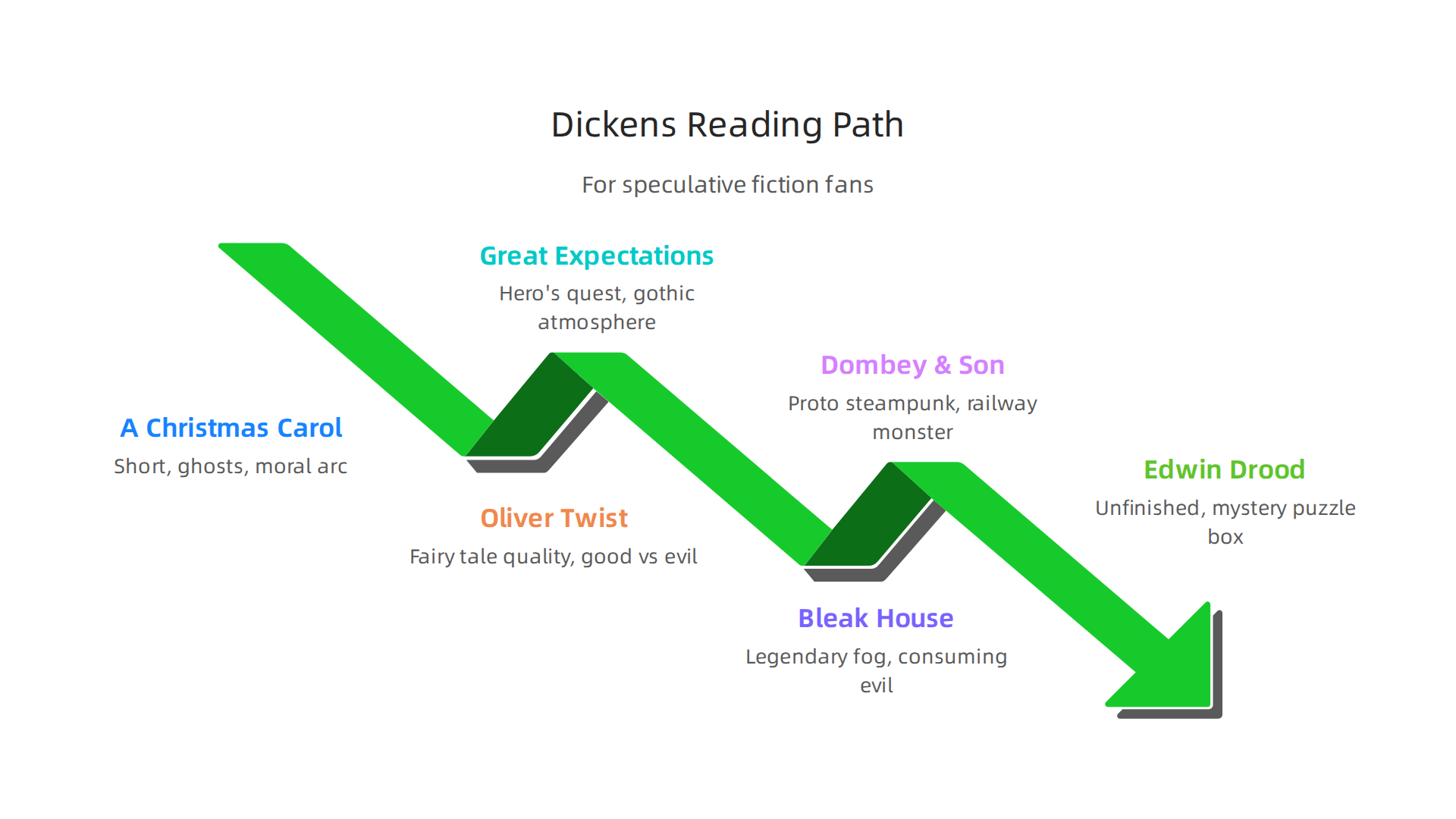
Start here: A Christmas Carol
This is the easiest entry point. It is short. It has ghosts. It has a clear moral arc. You can read it in a weekend. Dickens expert Jenny Hartley recommends it as a perfect starting point on FiveBooks. The magical elements feel natural to anyone who loves fantasy. It is a warm up.
Level up: Great Expectations
This novel is a little longer but still very approachable. Rich Horton notes on his Substack that it is "more tightly constructed than other Dickens novels." That means the plot moves well. But here is the cool part for fantasy readers. Pip’s journey feels almost like a cursed hero’s quest. The mysterious benefactor. The haunted house. The foggy marshes. There is a subtle magical realism in the way Dickens describes Pip’s strange encounters. Your group can talk about how atmosphere creates a sense of fate and doom.
Branch out: Oliver Twist
This one is famous for a reason. The orphan story has a fairy tale quality to it. The pure hearted hero. The villainous Fagin. The twist of fate at the end. It is like reading a dark fairy tale set in London. Pan Macmillan calls it one of the era defining novels that explores social concerns. But for fantasy fans, the real draw is the stark good versus evil structure. It feels familiar.
Get weird: Dombey and Son
Now we get into the unusual stuff. This novel is often overlooked by general readers. And that is a shame. Because it has a secret. It is one of the first proto steampunk novels ever written. Dickens imagines the railway as a monster. A force of destruction and change. He describes trains with almost industrial fantasy language. The railroad literally crushes a character and alters the story. If your group loves urban fantasy or steampunk, this one will blow their minds.
Go deep: Bleak House
This is the big one. The fog at the start is legendary. It reads like a fantasy world building introduction. The Court of Chancery is a vague, all consuming evil force. There is a mysterious illness. A hidden inheritance. A character who literally wastes away. The atmosphere is so thick you can cut it with a knife. Your book club will have a field day comparing it to the dark cities in modern classic fantasy books.
Hidden gem: The Mystery of Edwin Drood
This one is unfinished. And that makes it weird. Dickens died before he could finish it. So the ending is a mystery that readers have been trying to solve for over 150 years. It is like a puzzle box. If your group loves speculative fiction and conspiracy theories, this is the perfect choice. It is a literary fiction book that doubles as a game.
How to Find More Hidden Gems
The best resource for discovering unusual Dickens novels is the expert curated list from FiveBooks. Jenny Hartley recommends the best of Dickens and includes some titles you probably have never heard of.
Another great option is the Pan Macmillan guide for every type of reader. They break down which books fit different moods and tastes.
You can also check out book club collections like the one from Davenport Library. They offer discussion guides that help you dig into the hidden layers of these stories.
If your group wants more reading ideas that match your taste, Browse Recommendations on our blog for curated lists and hidden gems. We specialize in helping fantasy and science fiction readers discover unusual books they will love.
Take it slow. Start with the ghost story. Then move to the tightly plotted quest. Then dive into the weird train novel. By the end, you will see Dickens the way fantasy fans always should. As a master of world building, atmosphere, and strange, magical storytelling.
Summary
This article reframes Charles Dickens as a writer whose work often reads like classic fantasy and speculative fiction, arguing that his novels contain ghosts, time‑bending scenes, vivid atmosphere, and sprawling world‑building that modern readers already love. It explains how Dickens’ serial publication, large casts, and moral arcs anticipate techniques used in today’s fantasy and sci‑fi, and shows how those elements appear in specific books like A Christmas Carol, Great Expectations, Bleak House, Our Mutual Friend, and The Mystery of Edwin Drood. The guide gives clear reading recommendations based on taste—short ghost stories for newcomers, tightly plotted novels for quest lovers, and weirder titles for fans of steampunk or grimdark—and offers a simple reading path from familiar to experimental. It also includes practical tips for book clubs, discussion prompts, and pairing ideas to connect Dickens with contemporary fantasy. By the end, readers will know which Dickens novel to try first, why his fiction still matters to speculative readers, and how to use his books to deepen conversations and discover unexpected pleasures.