
Introduction
Do you ever feel like there are just too many books out there?

You want to read something new and deep, but you do not have hours to sort through everything. You crave imaginative worlds that spark your mind. You just need them in smaller, more focused doses.
That is where short story collections shine. Books that include a title and then the words and other stories act like a story dispensary. They give you concentrated bursts of creative fiction. They are perfect for readers who love the core fiction characteristics of fantasy, science fiction, or speculative fiction but lack the time for a long novel.
Here is the truth. Even finding great collections is still a challenge. New releases come out constantly. Separating the gems from the noise is tough.
This guide gives you a simple and proven system to find the and other stories collections that truly match your personal taste. No more wasted time. No more guessing.
We built this site to help you discover books you will actually love.

If you enjoy epic worldbuilding, take a look at our fantasy book recommendations for readers who love J.R.R. Tolkien. It is a perfect starting point for your journey. When you are ready for suggestions that fit you even better, browse our full list of recommendations to uncover your next great read.
The Resurgence of Short Story Collections in Speculative Fiction
You might expect short stories to be dying. But the opposite is true. In fact, the and other stories format is experiencing a serious comeback, especially in fantasy, science fiction, and speculative fiction. Why now? Because these collections solve a huge problem for modern readers: they give you concentrated creativity without the time commitment of a 500-page novel.
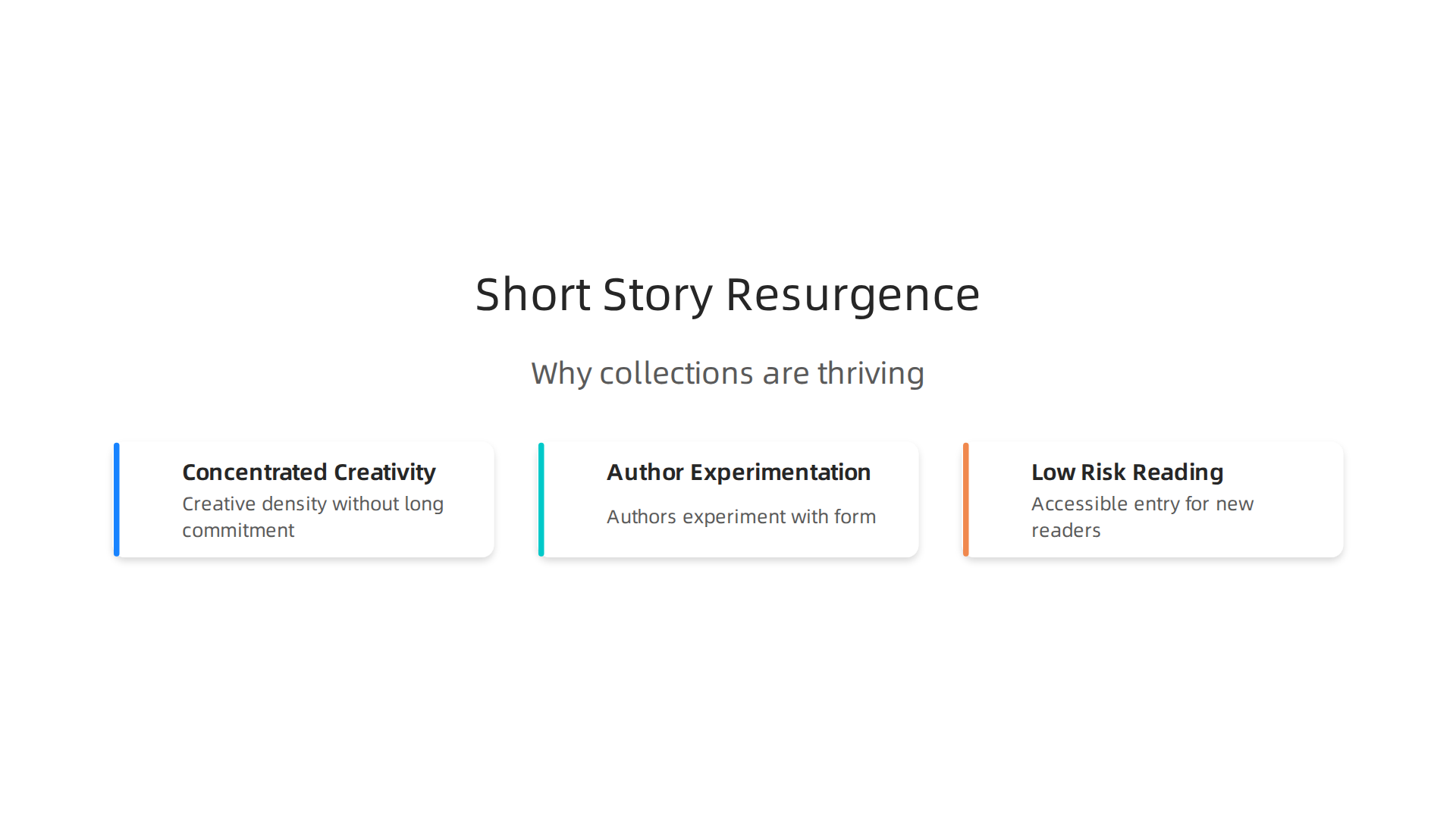
Here is the real reason short story collections are booming. They let authors experiment in ways that big novels do not allow.

Writers can try wild voices, weird settings, and strange structures. They can break all the rules in a single 20-page story. That freedom leads to some of the most exciting fiction characteristics you will find anywhere. You get bursts of imagination that push boundaries.
For you as a reader, a collection acts as a low-risk entry point. You can sample a new author without betting a week of your life on a doorstop novel. Try one story. If you do not like it, flip to the next. No guilt. No wasted time. And if you love what you find, you have a whole series of other stories waiting.
The numbers back this up. Small presses and major imprints are both publishing more short story anthologies than ever before. In 2024 alone, dozens of standout collections hit the shelves, many from indie authors and niche publishers [^cite: https://www.infomancy.net/short-story-collections-from-2024/]. The industry is thriving, with an overwhelming number of science fiction short stories to choose from each year [^cite: https://classicsofsciencefiction.com/2024/11/10/the-state-of-the-science-fiction-short-story-in-2024/]. Look at the most buzzed-about titles coming out in 2026. Titles like Uncertain Sons and Other Stories by Thomas Ha and The Universe Box by Michael Swanwick prove that the anthology format is alive and well [^cite: https://www.shortsf.com/lists/mybest2024]. BookRiot even rounded up the most exciting new sci-fi and fantasy collections of 2025, showing that both big publishers and small presses are all in

[^cite: https://bookriot.com/new-sff-collections-2025/].
So this is not a niche trend. Short story collections are becoming a mainstream way to discover fresh creative voices. And they often show up with that classic label: Title and Other Stories. That phrase is your signal that a story dispensary is waiting for you.
If you want to explore this trend yourself, start with authors you already love. For example, if you enjoy epic fantasy worlds, check out our fantasy book recommendations for readers who love J.R.R. Tolkien. Many of those authors have short story collections that let you sample their style before committing to a series.
Ready to find your next collection? We have curated lists of hidden gems and new releases. Browse our recommendations to uncover the best and other stories books that match your taste.
Decoding the ‘And Other Stories’ Signature
You see it on the cover or in the subtitle: Title and Other Stories. It is a small phrase, but it carries a lot of weight. For readers in 2026, this label signals something important. It tells you that this is not a random pile of stories thrown together. Instead, you are getting a thematically linked collection, a carefully curated batch of fiction characteristics that work together.
Think of it as a story dispensary. Each piece inside shares a mood, a setting, or a big question. The author and editor chose these other stories because they belong together. They talk to each other. They build on a central idea.
So what kinds of books use this label most often? You find it in dark fantasy, slipstream, comic fantasy, and literary speculative fiction. These genres thrive on experimentation. A collection with and other stories in the title often blends tones and breaks rules. It is a promise that the author is taking you on a journey, not just throwing words at the wall.
Readers trust this marker. They know that a story collection bearing this phrase has been polished and planned. It is a sign of quality, a signal that someone took the time to connect the dots. Even books that blur the line between novel and story collection sometimes adopt this label to emphasize their shared backbone [^cite: https://electricliterature.com/books-that-blur-the-boundaries-between-novel-and-story-collection/]. That trust is earned over years of consistent, excellent storytelling.
If you want a taste of that trust in action, try authors who master multiple voices in a single book. Many great novels use shifting perspectives to explore one theme from every angle

[^cite: https://lithub.com/many-voices-one-story-a-multi-perspective-novel-reading-list/]. A collection works the same way, just with more breathing room for each and other stories entry.
For a deeper look at how authors build worlds across multiple stories, check out our fantasy book recommendations for readers who love J.R.R. Tolkien. Many of those authors have collections that follow this exact pattern.
Ready to find a collection that feels made for you? Browse Recommendations and let us match you with hidden gems that earn that trusted label.
Key Fiction Elements That Define a Stellar Collection
So how do you spot a collection that delivers on the promise of that and other stories label? It comes down to a few specific fiction characteristics. The best collections do three things really well. Let’s break each one down.
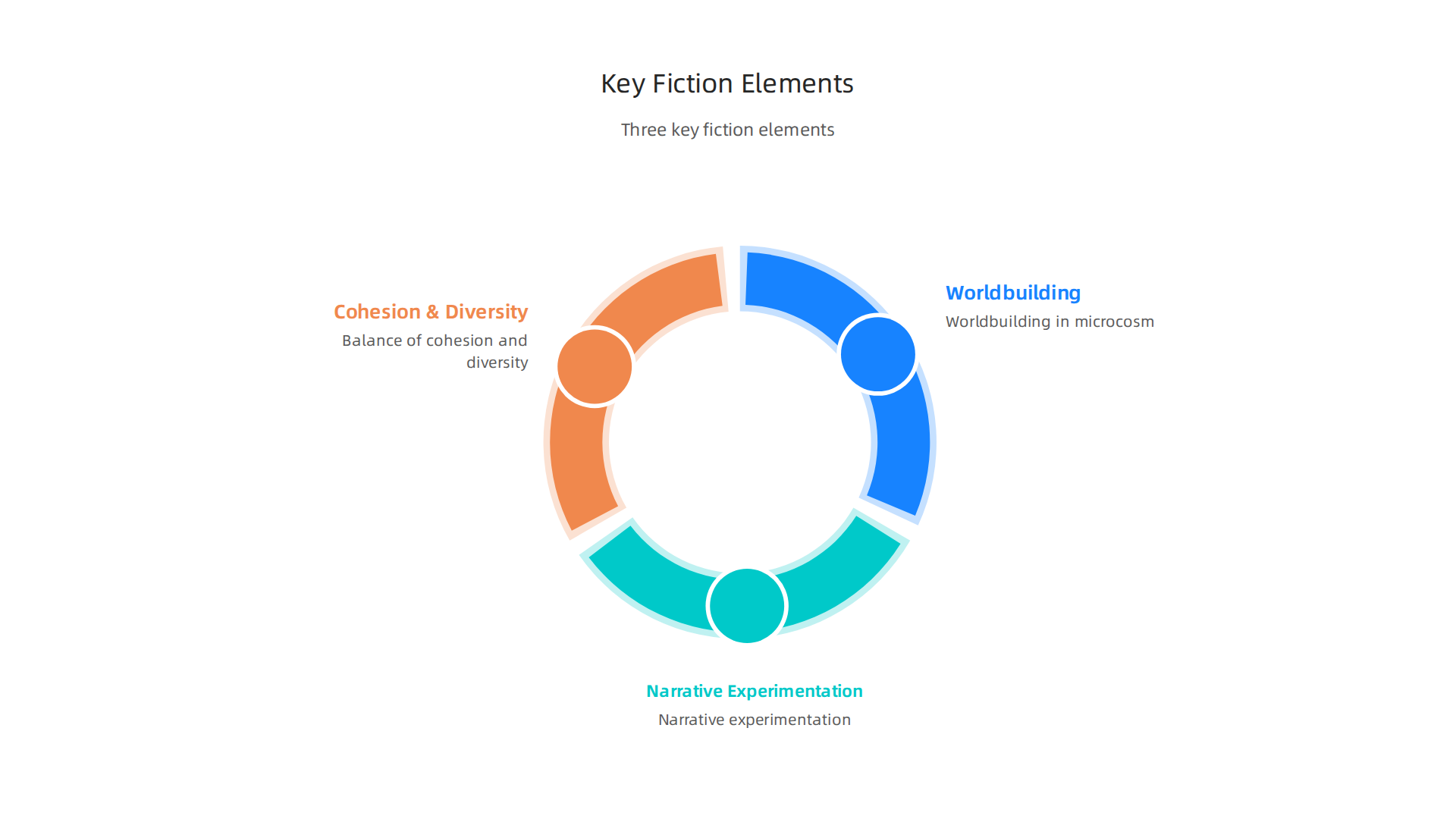
First, think about worldbuilding in microcosm. A short story does not have hundreds of pages to build a whole universe. It has to work fast. Great writers imply more than they describe. They drop a single detail that makes you picture an entire city or a strange new rule of magic. They get right into the heart of the conflict without wasting time setting up the scene [^cite: https://thewritepractice.com/successful-story-elements/]. That skill is what turns a quick read into a story that sticks with you. For readers who love epic worlds, this kind of tight worldbuilding can feel even more impressive than a thousand page novel.
Next, look for narrative experimentation. Collections are where authors play. You might find unreliable narrators, a story told in second person, or a timeline that jumps all over the place. Some collections even blend genres like magical realism with science fiction and fantasy to explore real world issues [^cite: https://bookriot.com/genre-blending-short-story-collections/]. These risks pay off when they make you see the theme in a new light. A collection that experiments feels fresh. It pushes the boundaries of what a story can be.
Finally, there is the balance between cohesion and diversity. A great collection needs a unifying thread. That could be a shared mood, a repeated question, or a single setting. But it also needs variety. You do not want seven stories that feel identical. The best editors curate with care, picking pieces that talk to each other while standing on their own [^cite: https://www.thenovelry.com/blog/how-to-write-a-short-story-collection]. This balance is what makes an and other stories collection feel like a complete journey, not just a random grab bag.
If you enjoy authors who master this balance, you might love the deep worldbuilding in our fantasy book recommendations for readers who love J.R.R. Tolkien. Those writers often publish collections that hit all three marks.
Ready to find your next great read? Browse Recommendations and we will point you to hidden gems and curated lists that match your taste.
You know what makes a great collection tick. But here is the real challenge. Finding one that actually fits your specific taste can be harder than it should be. Generic algorithms just do not get you.
How to Discover Collections That Match Your Niche Taste
Big recommendation engines on sites like Amazon or Goodreads are great at pushing bestsellers. They are terrible at surfacing the weird, wonderful and other stories collections that feel like they were written just for you. If you love a very specific flavor of speculative fiction, you need a smarter approach. Here is how to find the hidden gems yourself.
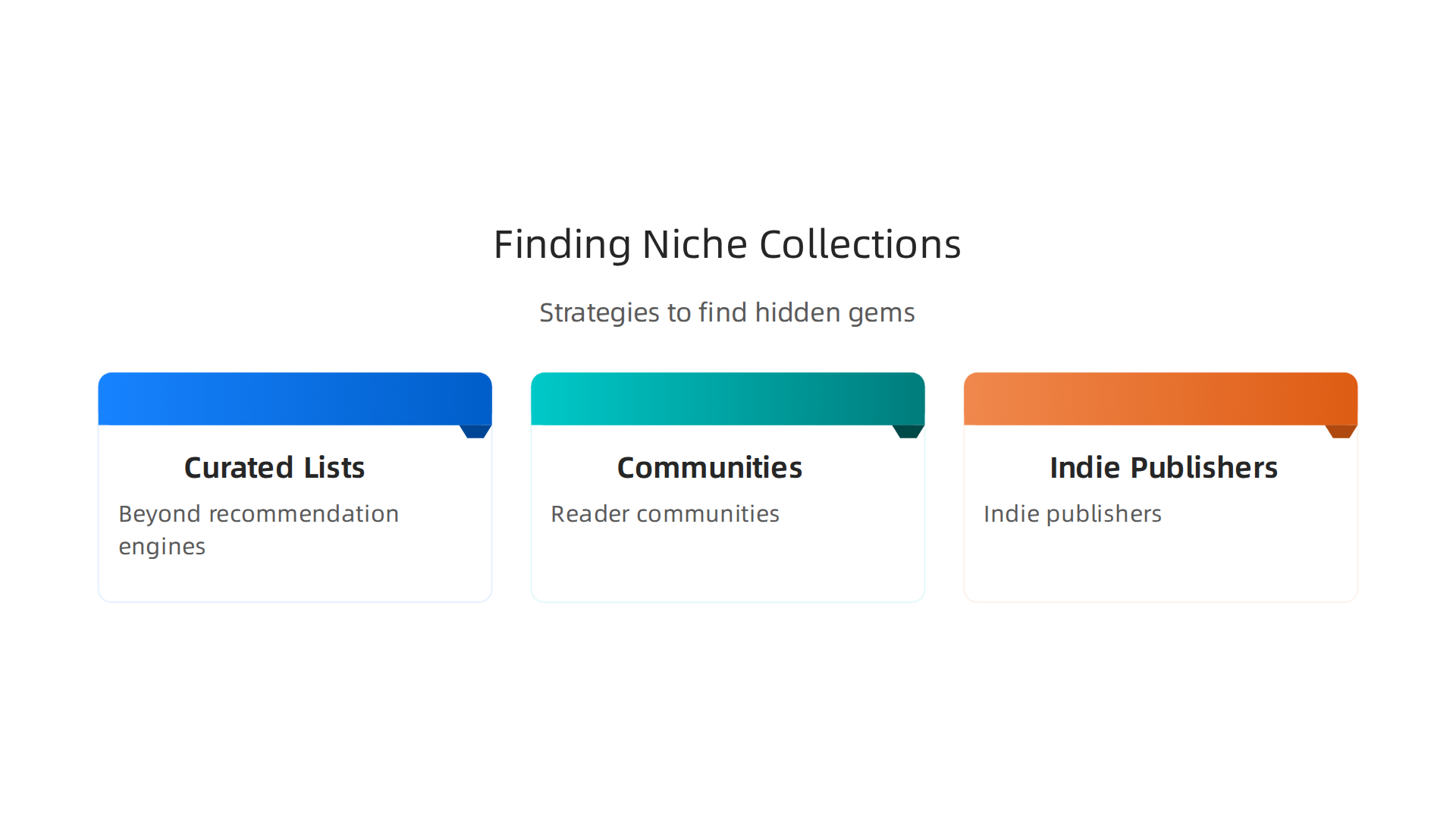
Look for Curated Lists and Specialized Newsletters
Instead of trusting a machine, trust a human with great taste. A good "story dispensary" or curated list does the hard digging for you. These curators read dozens of books so you do not have to. They filter out the noise and point you straight to the good stuff. This solves the feeling of information overload we all get when we scroll through thousands of options.
Join a Community of Passionate Readers
Book clubs and online communities are peer driven. The best way to find fresh "other stories" is to talk to people who love them.

Places like Reddit, Discord, and specialized forum threads are full of readers who love dissecting the exact "fiction characteristics" that make a collection special [^cite: https://absolutewrite.com/forums/index.php?threads%2Fhow-do-you-guys-find-new-sff-books-to-read.347591%2F]. This is where you hear about the truly unique stuff that flies under the radar.
Support Indie Publishers and Small Presses
Big publishers play it safe. Small presses take risks. They publish the most innovative short story collections because they are not afraid of strange ideas or experimental structures. If you want to be on the cutting edge of your genre, look at what small presses are releasing. They are the unsung heroes of the reading world.
One of our readers recently found a wild new collection through a small press recommendation on Discord. If you love speculative fiction that pushes boundaries, you might enjoy our guide on The Hunger Games Book Readers Will Love These YA Speculative Fiction Picks. Many of those authors also publish incredible short stories.
Want a taste of what this kind of discovery can lead to? Try a fast, absurd adventure full of wit and big ideas. Read Book 1 of the series and see where curiosity takes you.
Spotlight: Lesser-Known Authors and Unusual Voices
Once you know where to look, the next step is knowing whose voices are worth your time. The most exciting short fiction today does not always come from the big names. It comes from authors who take risks, break rules, and see the world differently. This is where you find the true "story dispensary" of original ideas.
Indie presses and self-published authors often publish the most creative short story collections. They are not afraid to experiment with structure or mix genres in surprising ways. For example, collections like Cursed Bunny by Bora Chung (translated from Korean) push boundaries and show what speculative fiction can really do. This book is one of many genre-blending short story collections that defy easy labels.
Translation and international speculative fiction offer a completely different window into the imagination. When you read stories from other countries, you get fresh cultural perspectives and unfamiliar storytelling traditions. It is like opening a door to a hundred new worlds. Many libraries and book clubs have started highlighting diverse voices, including collections that feature lesser-known Native women writers and other stories from underrepresented communities. These works often explore fiction characteristics we rarely see in mainstream English-language markets.
Award shortlists are your secret weapon. If you want a shortcut to quality, look at the nominees and winners of awards like the World Fantasy Award, the Locus Award, or the Shirley Jackson Award. These lists are curated by experts who love strange, experimental, and beautiful writing. The 10 best short story collections of the decade include many award-winning titles that you might never discover through big retailers.
If you love epic fantasy and want to find new authors who push the envelope, check out our recommendations for readers who love J.R.R. Tolkien. Many of those authors also publish incredible short stories.
Ready to try something completely different? Start with a fast, absurd adventure full of wit and big ideas. Explore the series and see what happens when rules are made to be broken.
A Practical Framework for Book Club Selection
You have found some incredible authors and unusual voices. Now how do you actually pick a collection that works for your book club?
Here is the truth. Short story collections are one of the best formats for group reading.

Why? Because every member will likely love a different story. One person might fall hard for a strange fantasy tale while someone else connects with a quiet realist piece. That variety creates the best kind of debate. As one book club guide notes, members come ready to defend their choices of favorites and least favorites. That is where real conversation lives.
But choosing the right collection takes a little structure. Here is a simple framework that works.
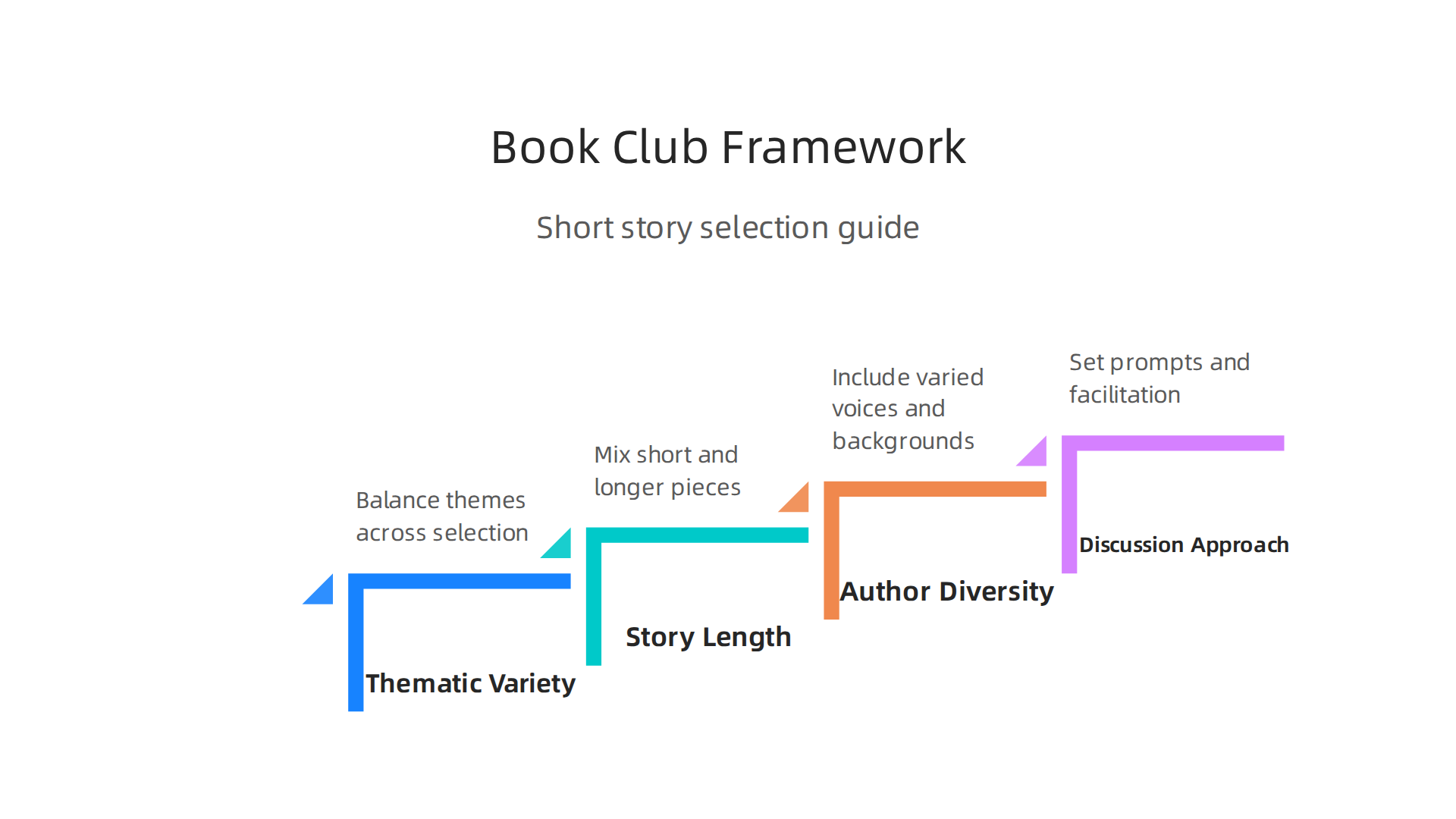
Start with thematic variety. Look for a collection that explores multiple ideas or emotions. A mix of humor, sorrow, wonder, and tension gives everyone something to grab onto. Collections that blend genres or play with different fiction characteristics often keep discussions lively.
Check story length and accessibility. Some collections have tales that take two minutes to read. Others need a full evening. Pick one with a good range so members can sample stories between meetings. The Colorado Book Club Resource highlights anthologies that take readers across many worlds and styles, which is perfect for groups with varied tastes.
Prioritize author diversity. Seek out collections that feature voices from different backgrounds, cultures, and traditions. Including works by lesser-known Native women writers and other underrepresented authors brings fresh perspectives your group might never encounter otherwise.
Plan your discussion approach. Before you pick, think about how your group will talk. Some clubs prefer to discuss every story. Others pick two or three favorites. You can ask members to prepare thoughts on a single story and then compare reactions.
When you follow this framework, you help every member feel heard. The right collection turns a book club meeting into a discovery session rather than a debate over one novel everyone either loved or hated.
Ready to find your next great group read? Tell us the genres your club loves and we will find curated recommendations that work for everyone. Browse Recommendations and start your next discussion today.
Community and Connection: Finding Your Tribe
Reading can feel lonely sometimes. You love an unusual collection but no one in your daily life has read it. That is where online communities change everything. Dedicated forums, Discord servers, and Goodreads groups help you find people who get what you love.
These spaces reduce the feeling of isolation. When you join a group focused on speculative fiction or short story anthologies, you discover readers who share your curiosity. The Colorado Book Club Resource shows how short story collections can take a book club "around the universe." That shared journey builds real connection.
Here is the thing. Short story collections are perfect for bonding. Every member will likely connect with a different tale. One person loves the strange fantasy piece. Another adores the quiet realist story. That variety creates richer conversations. You argue about favorites. You defend your choices. You learn how others see the world differently.
Curated guides and newsletters also help you feel like you belong somewhere. When a trusted source like Fiction Fantasy Novels recommends a collection of "Uncertain Sons and Other Stories" or highlights a hidden gem, you know the pick was made with care. That builds trust. Over time, these resources become your tribe. They point you to the stories you would never find alone.
If you love fantasy and science fiction, finding the right community matters. Start with articles like this one on fantasy book recommendations for Tolkien fans to see how a shared love of worldbuilding connects readers.
Your next great reading experience might come from a recommendation by someone who gets you. Browse Recommendations and let us help you find your tribe.
Summary
Short story collections — the familiar "Title and Other Stories" books — are enjoying a comeback in fantasy, science fiction, and speculative fiction because they deliver concentrated bursts of imagination without the time commitment of a novel. This article explains why that label matters, how the best collections use tight worldbuilding, narrative experimentation, and a balance of cohesion and variety, and why small presses and translated voices are often where the freshest work appears. You’ll get a practical system for discovering collections that suit your niche taste, from curated lists and newsletters to active communities and award shortlists. The guide also shows how to evaluate collections for book clubs, including tips on story length, thematic variety, and discussion strategies. By the end, you’ll know where to look, which fiction characteristics signal quality, and how to pick a collection that will spark conversation and personal discovery.